

I visited Estonia back in the winter of 2012 with my wife when we stayed for a city break in Tallinn. It’s a European city with a turbulent history and a great mix of the past and new with the Old Town and its surrounding wall a UNESCO heritage site.
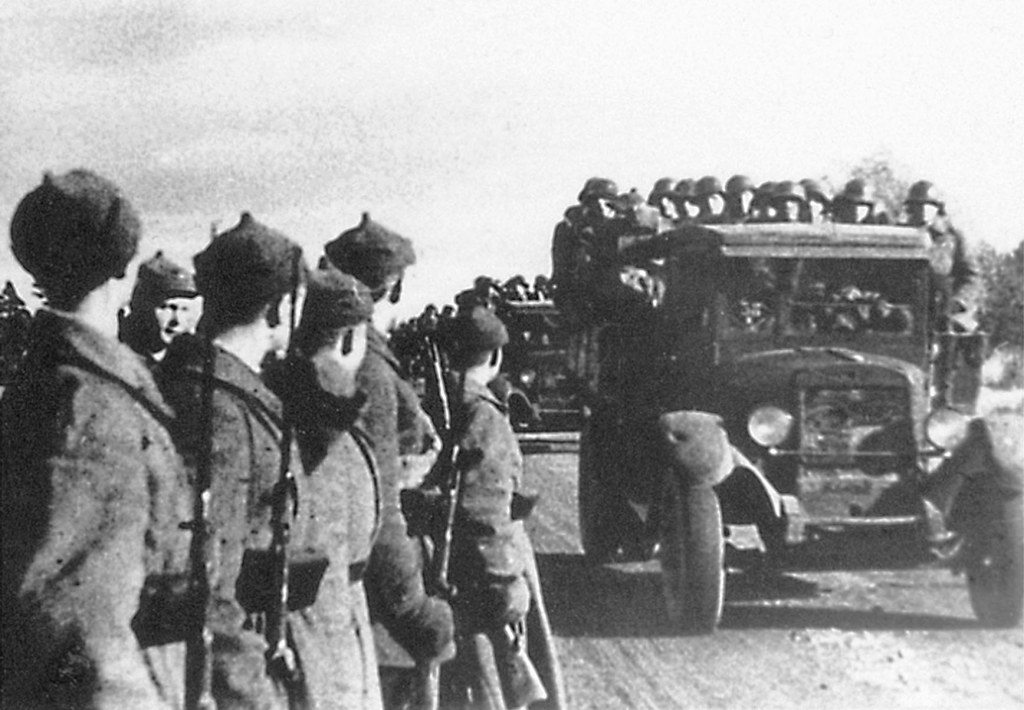
During the Second World War Estonia was occupied by the Soviet Union and annexed on 06 August 1940. The Russians enacted a reign of terror killing those it felt threatened by and deporting around 11000 others to Siberia of whom half died. When the Germans invaded Russia on 22 June 1941 under the codename Barbarossa, 34000 Estonian men were forced into the ranks of the Soviet Army. 70% never saw their homes again. Many Estonians retreated to the depths of the forests to conduct guerrilla warfare against Russian forces. Following significant losses the USSR left Tallinn in late August and by October German forces had captured the Estonian islands.
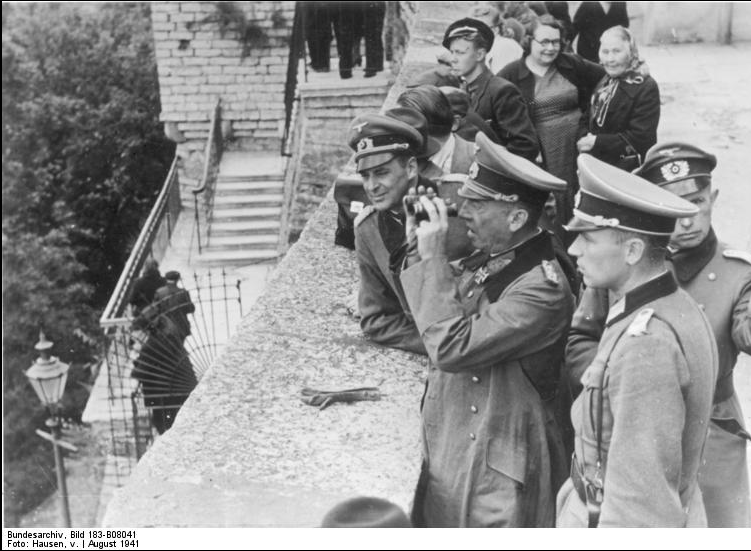
Any hope that the Germans would be better was quickly dispelled. Jews and others deemed a threat were forced into labour camps where many perished. After limited success to recruit Estonians the occupation authorities, working with a collaborationist regime, brought in enforced conscription in 1942 for citizens to fight with the German Army. Many Estonians escaped to Finland where they volunteered to fight with the Finnish Army.
In July 1944 the Soviet Army attacked and had routed the Germans by September of that year. Thousands of people fled West to avoid the new Russian occupation which would last until the collapse of the Soviet Union in 1991. Estonia paid a terrible price during the war with an estimated 25% of its population lost through death, forced deportations and people fleeing the invaders. The Soviets also seized around 5% of Estonian pre war territory.
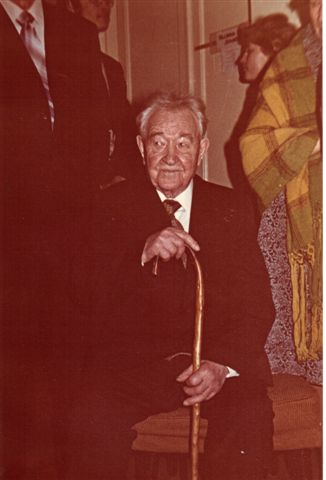
The following is one family’s story of life during the war provided by podcast listener Arno Lamster. It follows the fortunes of his Grandfather Erald Tammet and Great Grandfather Jaan Tammet.
At the start of WWII, my grandfather was 16. Pretty soon after Stalin and Hitler had divided Poland and Baltics between themselves, the soviets forced a deal to all the Baltic nations to let soviet forces in. The Soviet–Estonian Mutual Assistance Treaty, also known as the Bases Treaty was a bilateral treaty between the Soviet Union and Estonia, signed in Moscow on 28 September 1939. The treaty obliged both parties to respect each other’s sovereignty and independence, and allowed the Soviet government to establish military bases in Estonia. These bases facilitated the Soviet takeover of the country in June 1940 (Wikipedia). For our story – Estonia was occupied and the atrocities began.
“They came to our farm and took our horses away. They were drunk. The next day, me and my father went to look and maybe get our horses back. We discovered near Paldiski that during a drinking binge, they had driven the horses with the carriage over a cliff. It was all blood and wood trash down there”. He was 16. I can imagine how his dreams were crushed at that moment.
“Some time later all the radios were collected from people. Some people put a couple of brick inside their radio case and kept the working part, Russians hadn’t seen a radio anyway. When me and our farm-hand went into hiding, he was a clever guy and made our own radio. We were living under the barn floor and listening to radio all day long”
I assume this was when operation Barbarossa began and all the military age men had the choice to hide or be forced into Red Army. Pretty soon, Estonia was liberated from Soviets and occupied by Germany. Life was a little bit better. They even gave our family farm’s land back. Grandpa’s dad was reinstated as mayor for our local Parish. And in 42-43 they decided to electrify our village Leediküla. This is something I will never understand as copper was a strategic metal. Some German tanks with diesel-electric powertrain got cancelled because of a shortage of copper and they are electrifying Leediküla.
So my grandpa got the job of digging all the holes for utility posts. He dug them by hand and all around our village. As our farm sits a little farther away, the last hole to dig was next to our house. It was late on a Saturday but he decided to get it done. After all, it was sauna day and it sure would be nice to go to the sauna after digging all those holes. His dad started bugging him. “Why dig by hand? The Germans gave me some TNT, let’s just blow a hole in the ground.” They had a little beer and decided to try. Because it was close to the house, they covered the windows with blankets. It was a family tradition to sweep and mop the floors on Saturday and get a nice sauna going (still was in my childhood 60 years later). So the women did that and grandpa and his dad drank beer behind the house and having never worked with explosives, they didn’t know how much TNT was needed. “Hmm.. let’s just make sure the hole is big enough!” So it went bang and the window together with part of wall just flew right in the middle of the nicely cleaned house.
I have heard very many different versions of this story and didn’t believe it because there were no utility posts near the windows. But in 2016 I hired a digger to make a utility trench and sure enough, 2 meters from the window of the room I’m typing this text, there was an oak post under ground.
Life during German occupation was more or less normal, besides the incident with the utility post and Germans sometimes stealing hay for their horses. As time progressed and it got worse for the German army in the east, there were many mobilizations. First time grandpa got away by claiming that he had to keep up the farm. So a commission was formed to investigate what sort of work was needed to be done. When they came, two sisters were hiding in the attic as to show that there was no labour available in the family and grandpa got away. The second time mobilization came up, the family gave half a pig to a doctor to forge some papers. He got over excited and basically wrote that grandpa had only one leg.
It worked short term, but in March 1944, he had to join at age 20. At first, he, as a country boy, was a horseman delivering supplies. Then he was sent to Junior NCO school, but as the Soviets had another breakthrough, he was sent to the front without much training. The unit was 3. Piirikaitserügement or Estnisches Grenzschutzregiment 3 in German or 3. Border Defense Regiment in English. It wasn’t a highly trained unit and so, they were guarding a small section of lake Peipsi coast. They had some minor firefights, but mostly time was spent digging in. I do remember him saying that he came under mortar fire a couple times though. The thing he was most impressed with, was panzerfaust AT grenade launchers. It was fairly new technology back then and the fact that this “tube, thin as a rainwater pipe” could penetrate couple inches of solid steel was amazing to him (our homestead had a small blacksmith shop, so he must have had a pretty decent understanding of metal as material).
It got really sour in September, when Soviets captured Tartu and were moving rapidly across Estonia. As they heard the news from the south, my grandpa and his schoolmate decided to desert. They felt a purpose defending Estonian border against Russians, but they didn’t want to be part of a retreating German army. So when the Soviets moved rapidly across the country, they just hid in the forest. It probably saved their lives or getting captured, as the unit was destroyed shortly after. Hitler waited too long to give the permission to retreat, the front collapsed, and so only the staff of the Regiment survived as it was moving ahead of others.
And in the middle of all this turmoil, there was my grandfather with his good friend from school, roughly 220 kilometers from home, behind enemy lines. They slept during the day and moved during the night. Grandpa said to me that he didn’t bother to take the rifle but grenades were very useful when they came under fire. He never described any specifics about his long trek home but my grandmother told me: “Yeah, he was shot at couple of times, he never told me, but he told to other guys. “
I recently visited my mom to ask if she knows anything about that trip and she told me the following story. Somewhere near Aegviidu, they saw an old woman in a farm. As they were really hungry, they went to ask, if it’s possible to have something to eat. The woman said: “Yes of course, come right in, my own son also came home from the war! “. They went in and there was an Estonian boy in Soviet uniform. Thankfully, nothing happened, as they were all Estonians and that far outweighed the uniform they were wearing. But still if you have an awkward situation in life, it’s probably nothing. I don’t know how long it took, but eventually he got home safely. The uniform went straight to the sauna water boiler and a few left over grenades were blown up on the field for fun.
He was later mobilized to the Soviet army in some kind of work detail. “I was half a year in the German army and on the second week in the Soviet army, I got lice! “ – I have heard that sentence many times in my childhood. At the labour detail, they reconstructed a pier at Tallinn harbour. There were forms made from logs and the guys carried stone all day to fill these forms. He said they actually ate American canned meat while there. And all this with still the mate with whom he trekked across the country with. They also had a third guy from our village. And so they decided to forge some papers and bribe the guards to get on leave for the holiday (I don’t exactly know which but I suppose it was Christmas ’44 or Easter ’45).
When they went back, the guard they bribed, told them to go away, as the third guy had just came in and got into trouble and sent to Siberia (He later came back alive). So grandpa went to hiding in Southern-Estonia, occasionally visiting home. He wasn’t fully a partisan, but he couldn’t be around home as anyone could say he had served in German army and it was a serious problem. This was actually a huge thing in Estonia as people moved to places where no-one knew them. He was able to come out of hiding in 1953.
It wasn’t that easy for my great-grandfather as he had been labeled as a collaborator with the Nazis. He was hiding in the forest from the NKVD. At one time he was headed to a farm for a get- together, the NKVD got hold of it and ambushed the place, eventually setting the house on fire. By chance there happened to be a heavily wounded left-behind German soldier lying in bed that someone had picked up from the forest. He was burned in the fire and the Soviets considered his remains to be my great- grandfather’s. So his name was crossed of the list and he could come out of the forest and live in a shed behind one his daughter’s house. His papers were later fixed after Stalin died and there was an amnesty. My mom’s cousin still remembers the day, when she came home from school, there was cake and she was told the man living in our yard is actually her grandfather.
Copyright © Arno Lamster 2022. All rights reserved. No part of this work may be reproduced in any form or by any means without prior permission in writing of the author.
 Unconventional Soldier Blog
