


In podcast #045 “Stay Behind OPs (SBOP) & Ukraine” we asked if SBOP could have been used in Ukraine’s war with Russia. Moreover if Special Observer type troops had been deployed prior to the Russian offensive would their skills in surveillance, intelligence gathering and targeting have made Ukrainian artillery and rocket fires more effective?
Part of our talk focused on secure communications which was identified as the Achilles heel of SBOP units during the Cold War. This issue was exemplified by the problems encountered during exercise, BADGER’S LAIR, near Soltau West Germany in 1973. Patrols from 23 SAS Regt were quickly discovered by signals teams using direction finding equipment and dogs resulting in many hides being compromised.
We concluded that, if this concept was to be deployed once more, then secure, modern communications would be critical. This is an area where we don’t have much contemporary knowledge so asked the audience to help out. The following information was passed to us by listener TMG.
“A main reason why enemy frequencies aren’t jammed is for the J2 (intelligence) that can be gleaned from them such as content and DF (direction finding); a reason why ECM (electronic counter measures) is disliked in an EW (electronic warfare) environment. Jamming is an active EW measure and is putting a lot of energy down on specific frequencies so essentially a transmission in itself, which can be DF’d. Adversary forces can DF the jammer, call in a strike/fires and cause a devastating blow to the commanders intelligence gathering capabilities, another reason why passive measures are preferred.
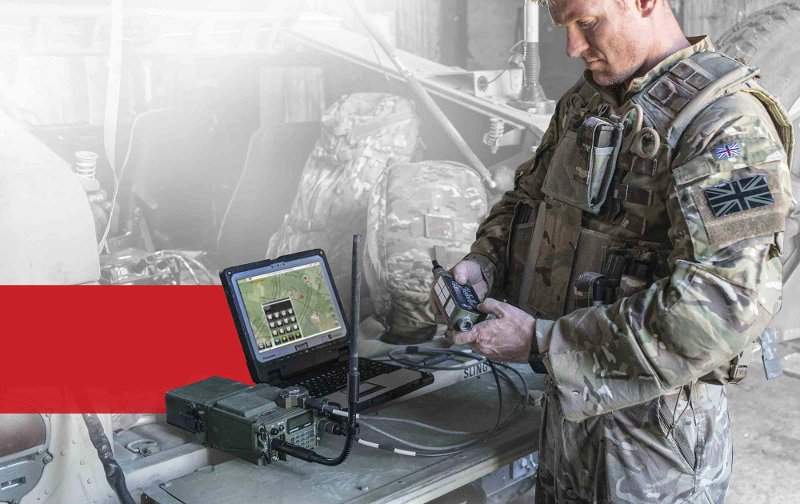
To answer the COMSEC question; most NATO SATCOM radios now such as the Harris AN/PRC 117 G/F use modulation methods such as Frequency Hopping Spread Spectrum (FHSS) and Direct Sequence Spread Spectrum (DSSS). FHSS is as you guys alluded to a pre set of frequencies that the radio can transmit on, which are cycled through within micro/milliseconds negating DF on certain frequencies. DSSS is a wideband signal that sits in the within the noise floor making it very hard to detect for adversary EW.
“Weight is obviously an issue which dictates to what can realistically be taken and how for long. For light role, it is generally SATCOM with HF in reserve.”
Pod Listener TMG
Combine these two with good COMSEC (communications security) drills such as transmission time, radio silence periods, encryption etc it makes them very hard to detect. Speaking from experience from a previous role. One specific ground based ISTAR (Intelligence, Surveillance, Target Acquisition & Reconnaissance) asset within the British Army that works at reach from friendly forces at the FLOT (Forward Line Of Own Troops) or beyond, currently have a plethora of comms kit available for use, such as the MMR, PRC 117, PRC 152 and BOWMAN HF and VHF sets. Weight is obviously an issue which dictates to what can realistically be taken and how for long. For light role, it is generally SATCOM with HF in reserve.“
It would appear that our podcast conclusion that a modern system consisting of SATCOM backed up by HF was correct. There’s life in the old dogs yet! If you would like to add to this conversation feel free to do so in the comments section below.
Copyright © 2023. All rights reserved by the Unconventional Soldier blog. No part of this work may be reproduced in any form or by any means without prior permission in writing of the author.
 Unconventional Soldier Blog