
CONTENTS
- Introduction.
- The German Climate.
- Personal Equipment In Conventional Royal Artillery (RA) Units In BAOR.
- Special OP Troop Weapons.
- Special OP Troop Clothing.
- Special OP Troop Daysack/Grab Bag.
- Special OP Troop Bergen Contents.
- Special OP Troop Optics.
- Special OP Troop Medical Kit.
- Summary.
INTRODUCTION

I’ve had several questions on social media regarding the personal equipment used by Special Observers in the “stay behind” Observation Post (OP) role during the Cold War. In reality the weapons and equipment issued, with a few exceptions, were commonly used throughout the field Army of the time.
The unit was formed in 1982 with the aim of digging in two OPs and a main underground”mexe” hide along the Inner German Border and allowing forward Soviet Army lead forces to pass over. Patrols would then engage the enemy in depth from OPs using the long-range guns and rocket launchers of the Royal Artillery. The role effectively ended with the collapse of the Soviet Union and the end of the Cold War. We cover the history of the unit in a podcast with its founder Major General Stone CB. You can listen to the pod here.
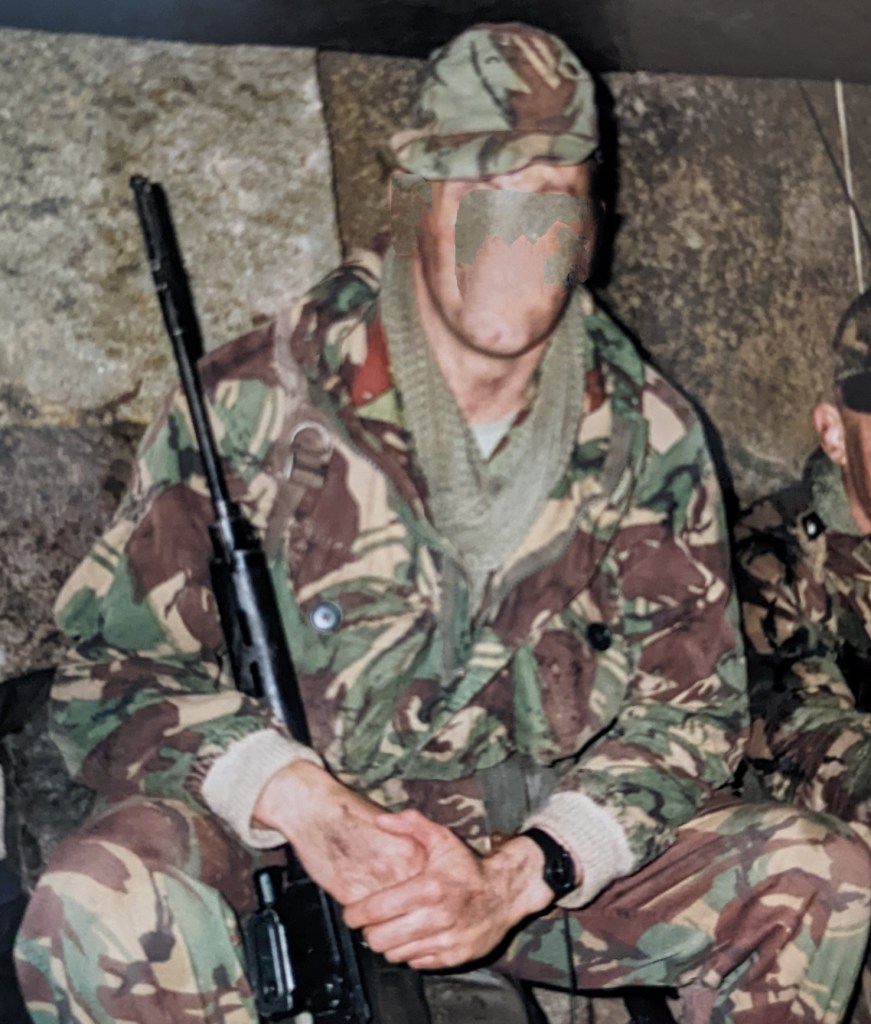
It’s important to realise the word “Special” in the role description was used to distinguish us from conventional field artillery OPs. We were “specialist” not Special Forces (SF) and I have obscured faces in the photos purely for privacy reasons.
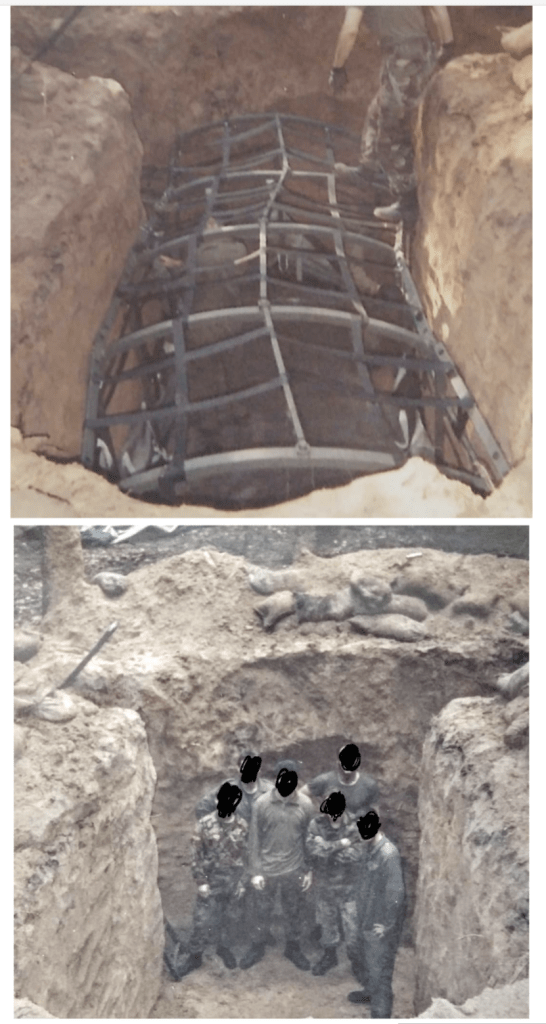
You can listen to our podcast on mexe hides, Ops and patrol equipment below.
In this blog I will give an overview of what most soldiers wore, carried on their person, in their belt kit, grab bag (usually a 25/30L daysack) and bergen (rucksack). Many spent large amounts of money buying kit to make the job easier. Thankfully clothing and equipment is much better these days though I have no doubt some fashionable items are still purchased in order to look “ally” or “warry” as it was called in our day. Army slang for looking the part.
It is being written about events that took place over 30 years ago, so some mistakes are inevitable. Note that the terms belt kit, fighting order and webbing are interchangeable but generally refer to the various pouches on a belt fastened around the waist and usually supported by a harness or yoke over the shoulders.
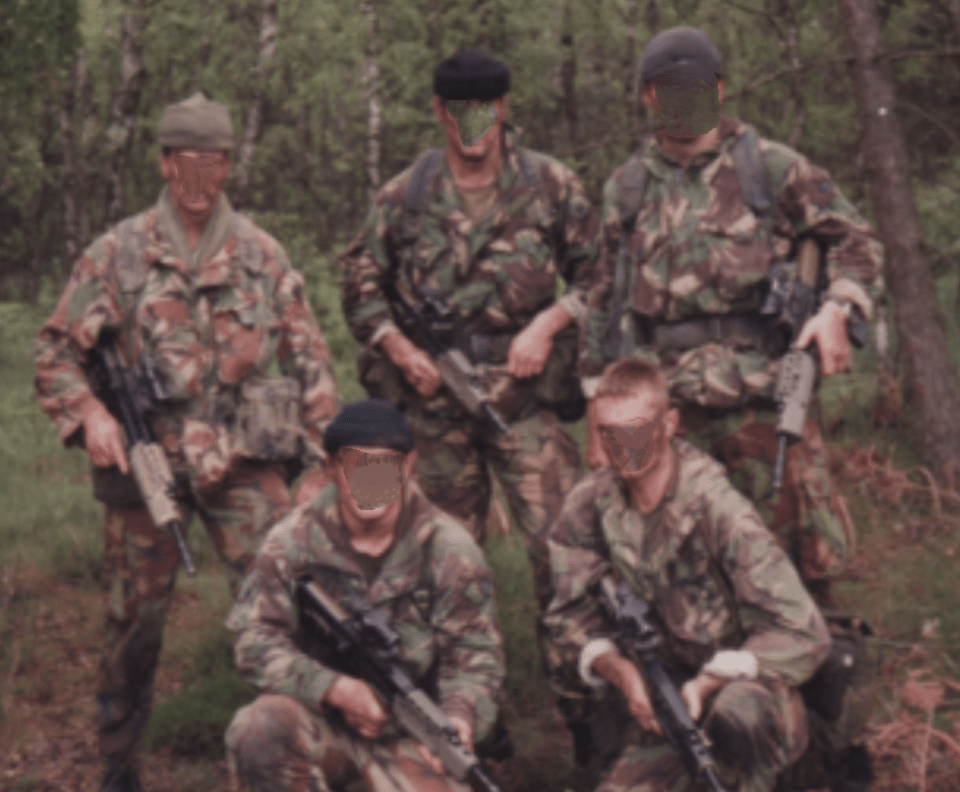
I’ve used a few photos from my own collection but in the pre smart phone era I didn’t take too many during my service. Firstly, the environments we worked in weren’t kind to military kit never mind delicate cameras. Second, it was actually frowned upon for operational security reasons. How times change. As a result, many of the images used have been obtained from former colleagues or the internet and vary in quality. On the Cold War Conversations podcast below I discuss my career in “stay behind” OP patrols during this period with host Ian Sanders.
THE GERMAN CLIMATE
Before moving on to the subject of clothing and equipment it is useful to discuss the environment we were working in and, as the German Army can attest on the Russian front in WW2, climate always has a say on how you operate as a soldier. The British Army at this time had uniforms specific to various theatres such as jungle, desert and arctic. However BAORs attitude to fighting in cold weather was indifferent at best. One OP Troop soldier recalls “I remember on arrival in Germany to my gun battery to collect my winter gear from the QM. I was treated to a pair of gloves combat, an extra pair of GS socks and the jewel in the crown, a head over. What, no parka or white cam?”
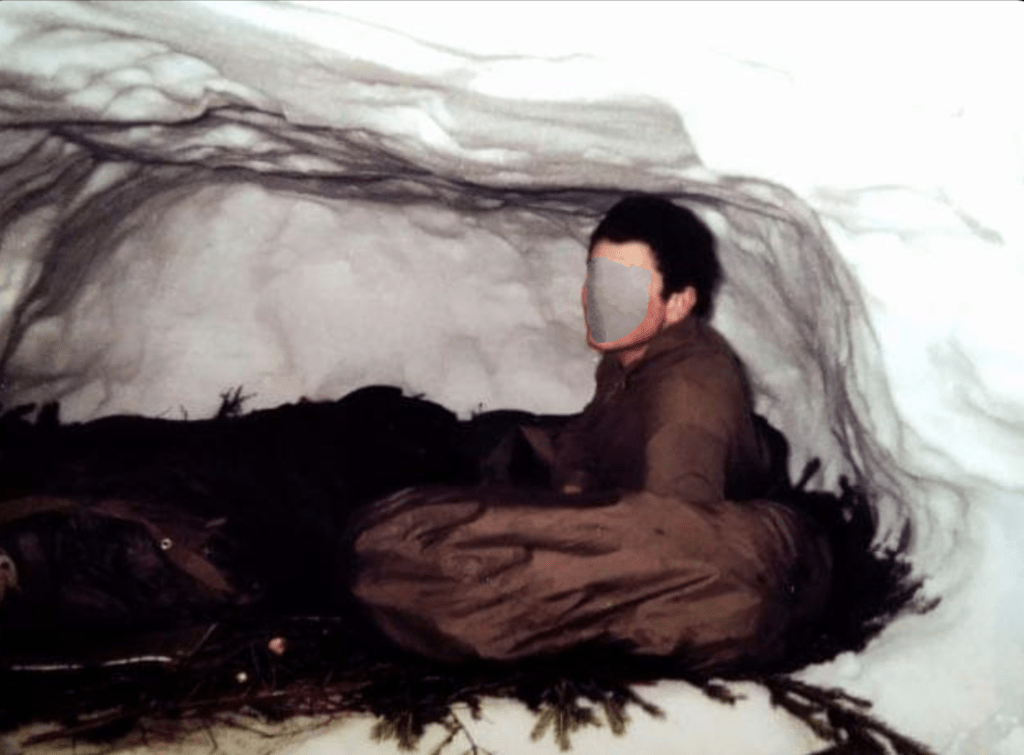
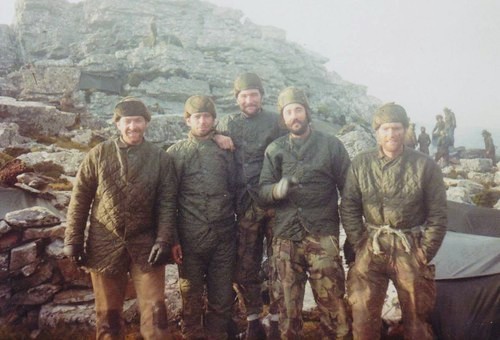
German winters could be harsh with temperatures well below zero. Factor in wind chill and you had very challenging conditions. The only gear we were given to cope with this were arctic caps (known as Deputy Dog hats due to the large ear flaps), woollen wristlets, cam whites and arctic sleeping bags. Many in the patrols purchased their own cold weather gear to make life more comfortable.
We were fortunate to have a number of arctic trained former members of 29 Commando Regiment RA in our ranks who passed on the vital skills they had learned on exercises in Norway. In addition, soldiers also attended the Winter Patrol course at the International Long Range Reconnaissance Patrol School (ILRRPS) at Weingarten. Deployments with the ACE Mobile Force Land (AMF(L)) to Norway also ensured that cold weather skills were kept up to date.

PERSONAL EQUIPMENT IN CONVENTIONAL ROYAL ARTILLERY (RA) UNITS IN BAOR
I will first cover the kit carried in a conventional RA Regiment most of which would’ve been familiar to 1950s National Servicemen.
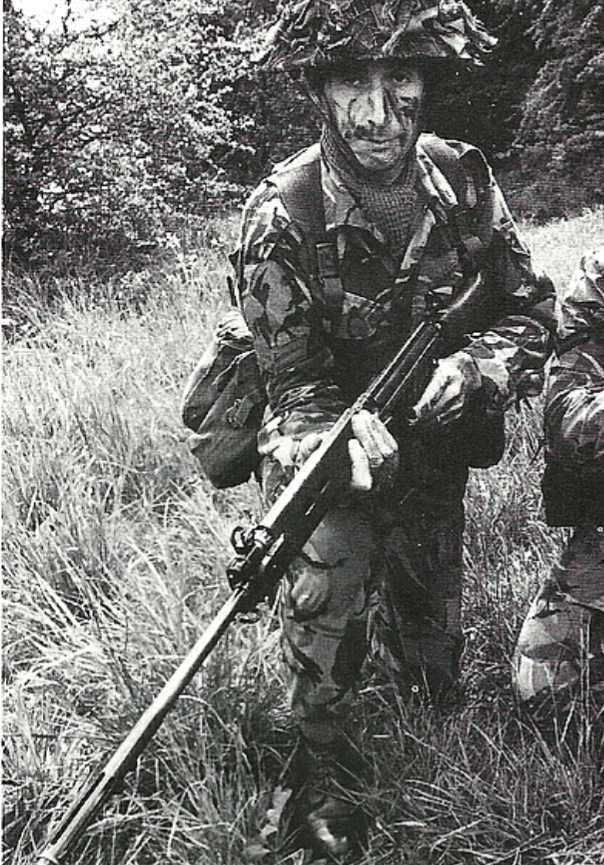
In 1985 I completed basic and trade training (signals) at the RA depot in Woolwich and was posted to 12 Air Defence Regiment based in Dortmund in the former West Germany. On arrival I was sent to HQ Battery and employed as a signaller on the Regimental Command Post.
After the initial running around, introductions, admin and equipment issue I was provided with an Active Edge packing list for my belt kit and large pack. Ex Active Edge was a periodical readiness exercise used to test a unit’s call out and deployment procedures if the Soviets decided to start WW3.
In reality it was rarely conducted by surprise as notice of the impending crash out normally leaked from Regimental Head Quarters. This resulted in a mass exodus of single soldiers downtown to take advantage of the generous drinking hours ensuring they wouldn’t be fit to drive the following morning. We often joked that if the Soviets invaded on a Friday they would’ve been at the channel before most of the lads returned from pissing it up downtown.
CLOTHING
At this time specialist textiles such as fleece and Gore-Tex were only just coming on the market. For soldiers wool and cotton remained the main clothing materials. The following was issued and worn on exercise:
- Combat 85 DPM jacket and trousers. I remember these being very poor quality. Buttons used to come off easily and stitching came loose with depressing frequency. Pockets were so badly designed that if you bent over the contents would fall out.
- KF shirt. A woollen shirt that was rough as sandpaper. In barracks these were sometimes cut down to be worn like an Edwardian collar under the jersey heavy wool with a T shirt.
- Norwegian army shirt. AKA Norgie. If allowed this was worn in preference to the KF. It was a zipped half rollneck with a terry towelling inner. Initially you had to buy them, but they were later an issued item. Very warm but once wet difficult to dry out.
- Jersey heavy wool. The once iconic British Army jumper with cotton elbow and shoulder patches with epaluettes. A very unforgiving item of clothing on fat lads.
- Chairman Mao suit. AKA Chinese fighting suit. These were made from a green nylon, thinly padded material not unlike the Barbour jackets you get today. Designed to be worn under your combats the jacket was fastened with chunky buttons. The trousers had a button on the waist and a tie cord. Full length zips allowed them to fit over your legs without taking off boots. The jacket was useless, but I do recall wearing the trousers in OPs in the stay behind role.
- Mark IV steel helmet. Entered service in the 1950s. Not much different to the ones worn in WW2 when the British Army fought from Normandy to Berlin. Cammed up with hessian scrim it had an elastic chin strap that made it bounce up and down on your head as you ran making it extremely uncomfortable.
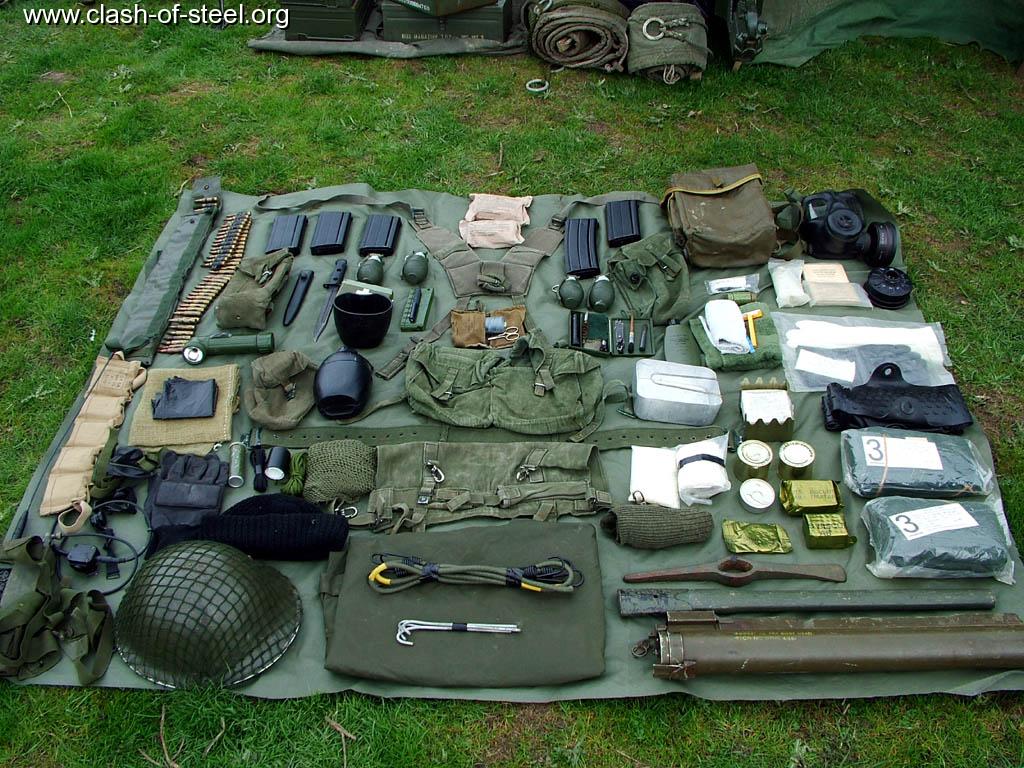
58 PATTERN BELT KIT CONTENTS
The Active Edge contents list were packed in 1958 pattern webbing equipment. As the name suggests it was introduced in the late 1950s and was truly awful. Some parts of the 44-pattern webbing it replaced were used in preference by some of the soldiers in the Special OP role. The 44-pattern water bottle pouch was the prime example as it had a loop belt fitting and not the clip system used on the 58 – pattern.

Constructed from canvas that shrunk when wet, the various pouches fastened to the belt and yoke by a series of open metal clips that slotted into inserts on the belt. The clips had to be crushed into place by a pair of pliers otherwise you had the embarrassment of an ammo pouch springing free at an inappropriate moment and usually in front of the Battery Sergeant Major. Experienced soldiers would tie the pouches on with cord to prevent this happening.
When finally clipped and tied together this belt kit normally consisted of two ammo pouches, two rear kidney pouches, a water bottle pouch and a respirator pouch. Carried on top or the bottom was a canvas poncho roll that contained an NBC suit. The whole ungainly package was usually held together by a bungee cord to stop it bouncing all over the place and assist in preventing it exploding apart.
The Active Edge packing list dictated what was carried in this ensemble and no deviation was allowed. The contents were more bullshit than practical and generally useless from a dismounted soldiering perspective.
58 PATTERN LARGE PACK CONTENTS
At this time the GS bergen , often referred to as Para/SAS bergen, was not generally issued to Gunner units.
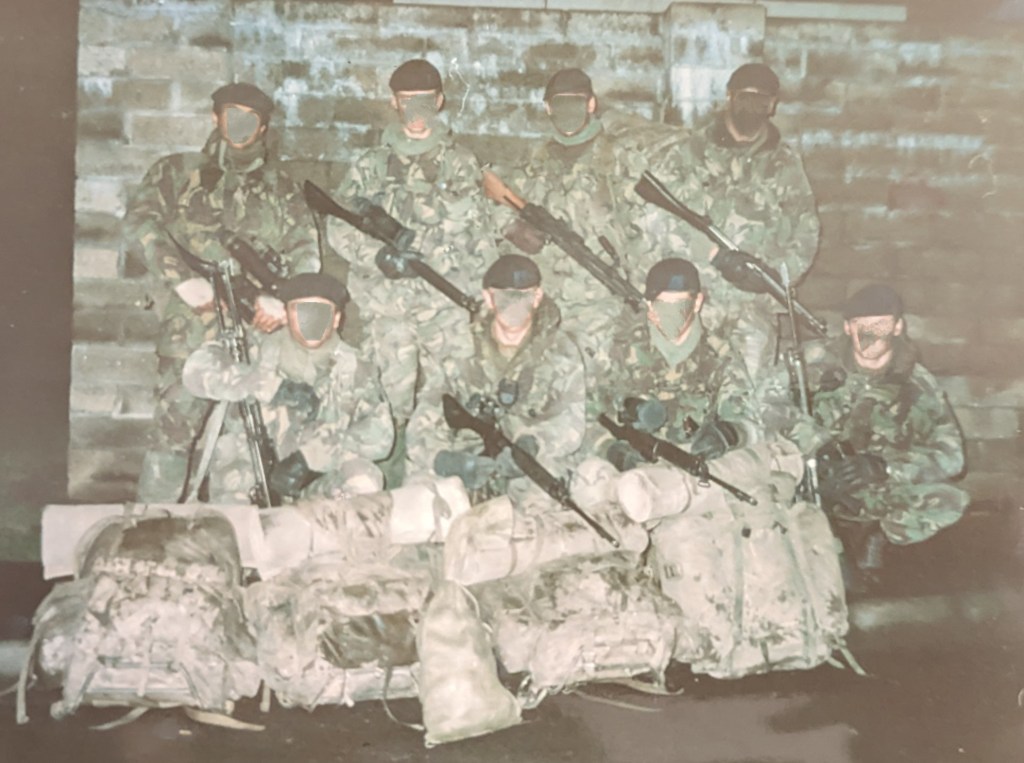
Everyone else had to make do with the 58-pattern large pack which was actually a misnomer as it was tiny. Privately purchased bergens, like the Berghaus Crusader, were just appearing on the market but were very expensive and actively discouraged as they took up too much room in vehicles. Like the packing list for belt kit what you packed in your large pack was non-negotiable and open to debate about its usefulness. I am not sure having boot cleaning kit and a housewife (sewing kit) in your belt kit would have been much use against the advancing hordes of 3 Shock Army.
SPECIAL OP TROOP WEAPONS
L1A1 Self Loading Rifle
The standard British Army weapon of the time was the 7.62mm Self Loading Rifle (SLR). It was reliable and robust but heavy and long and not entirely suited to patrols with large bergens or in the confined space of an OP. Many Cold War warriors get misty eyed about the SLR but, in truth, already in service for over 30 years it was beginning to show its age.
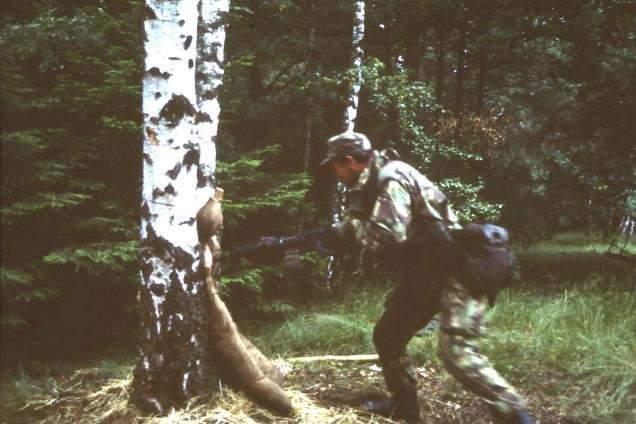
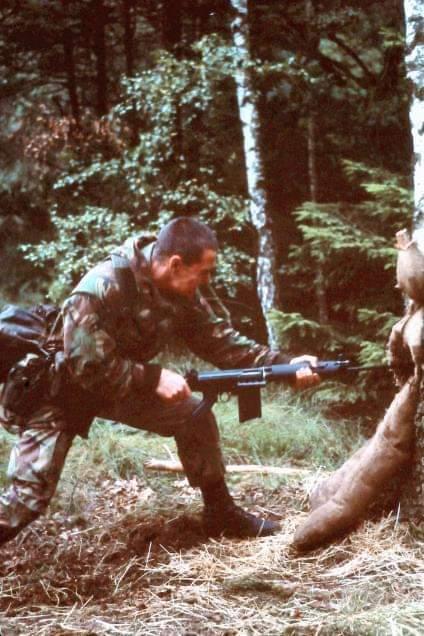
Armalite/M16 variants were issued for jungle training and operations in Northern Ireland and also to SF units like 22 SAS. This weapon would have been a better fit for our job. I once used the folding stock 7.62mm G3 on a ILRRPS CQB course and even that would have been more suitable. But we were stuck with the SLR until the SA80A1 appeared on the scene shorter but also heavy. Not long after we would gladly have had the SLR back but that’s another story.
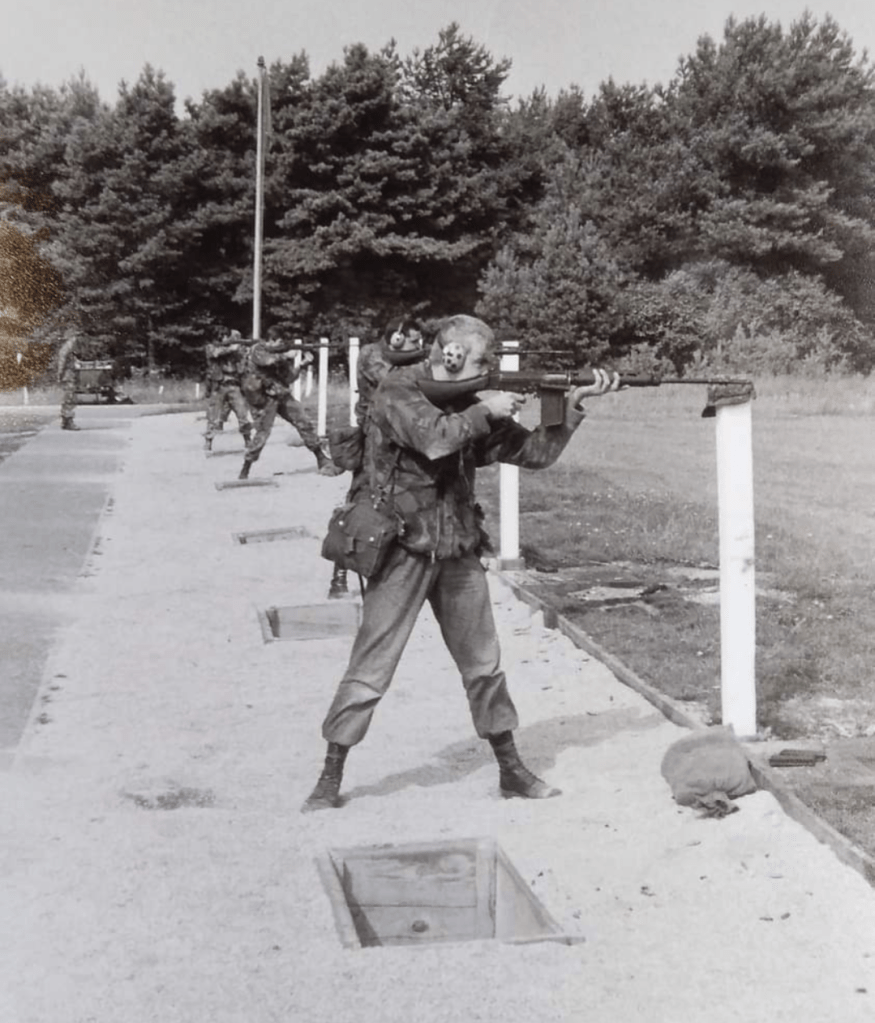
L9A1 Browning Pistol
As a backup weapon everyone in the patrol was issued the 9mm Browning pistol. This was an excellent and reliable automatic pistol first used by airborne and commando forces in WW2 and in general service by the early 1950s. Extremely useful in the confines of an OP or mexe hide. It remained in service with the British Army up to the first decade of this century.
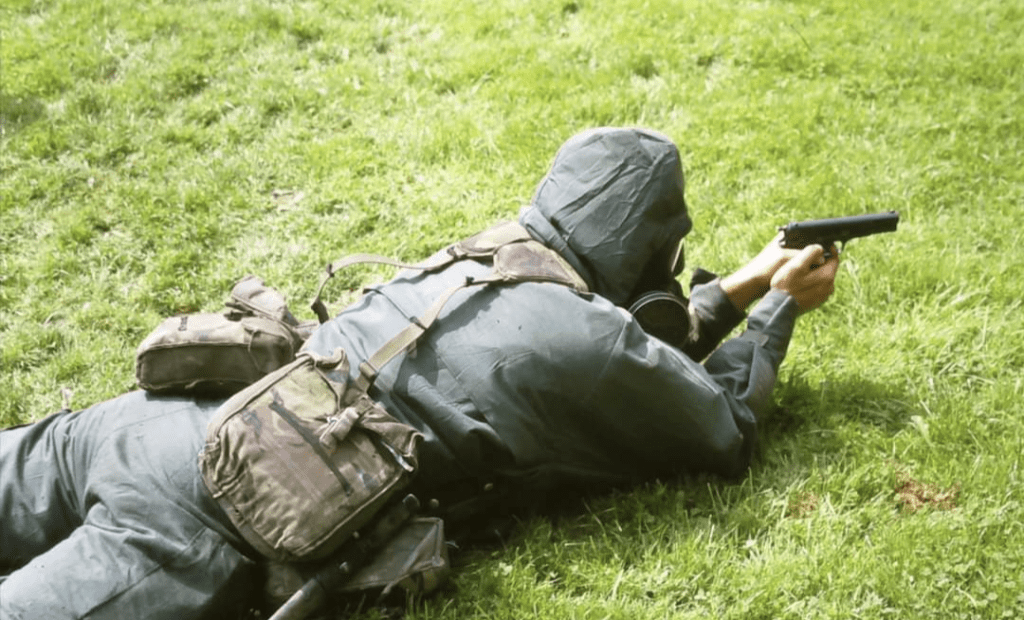
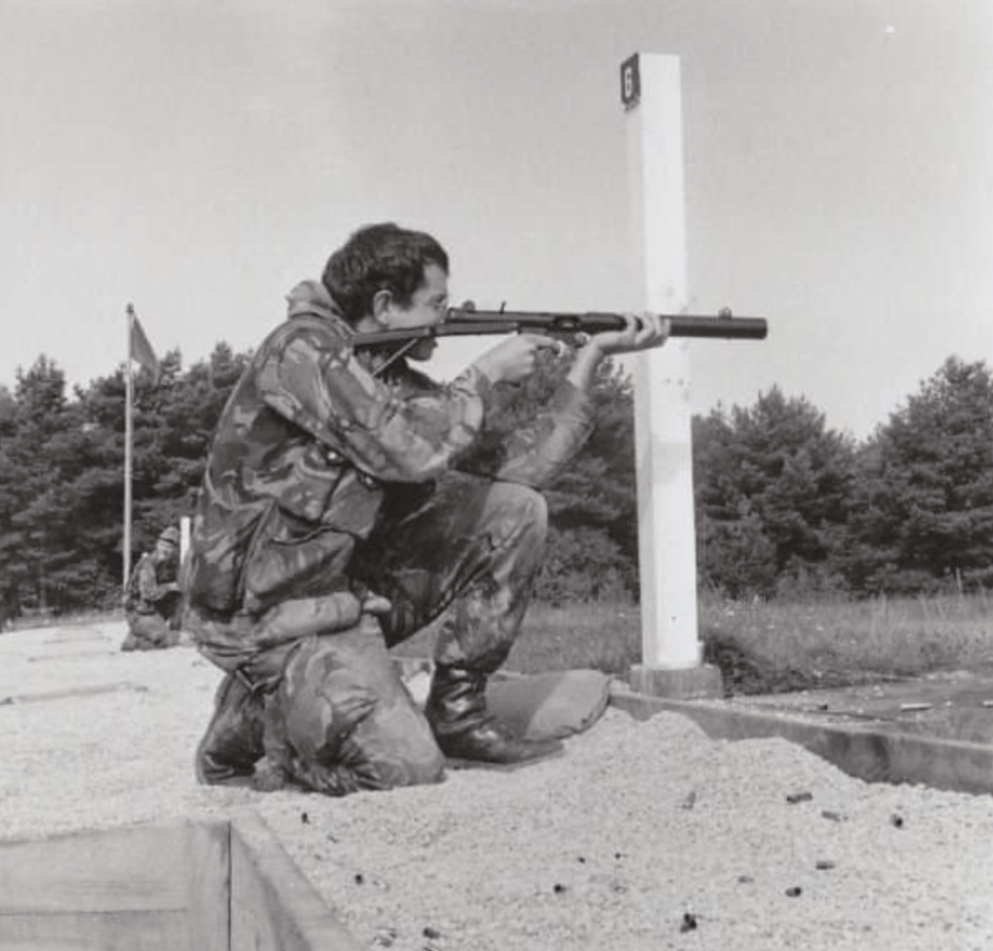
L34A1 Suppressed Sterling SMG
The only unique weapon we had was a suppressed 9mm Sterling SMG usually carried by the lead scout. Generally not highly regarded and would struggle to penetrate a wet combat jacket at 5m moreover the 9mm round would have been easily deflected in the thick German woods we operated in. If firing on auto for a sustained period, the barrel would get hot very quickly. Not good as this was where you gripped the weapon. A former colleague recalls “The saga we had with them and the armourers. You cannot fire it on auto as it wrecks the packing! So how do we find out what it sounds like and handles? Ignore them and fire it anyway. We were supposed to get the AR15 but if accepted it we would be at the back of the queue for the SA80 coming into service. Geordie & I said take the AR15 but got overruled by those who thought they knew better.”
Not all agreed and one former member of the unit wrote to me “Lot of negative remarks over the SMGs, I personally liked them. Lot of smoke when firing but believe this is caused by excess oil in suppressor. Should be thoroughly cleaned pre firing. Not as silent as MP5SD, (closed bolt) but not bad in my opinion.”

SPECIAL OP TROOP CLOTHING
I passed the patrol selection course in 1987 after a demanding five months. Once in the troop the choice of personal equipment was, in the main, down to the individual though training, tactics and standard operating procedures (SOP) usually dictated some commonality. In reality belt kit rigs and contents varied greatly. However, all patrol members operated on the concept of four lines of equipment:
- First line: contents of smock.
- Second line: contents of belt kit.
- Third line: grab bag.
- Fourth line: bergen.
You were also given a lot of flexibility over your choice of clothing much to the chagrin of the RSM. Uniform was picked for practicality and many soldiers invested a lot of money in items that weren’t issued or made the job easier such as boots and lightweight sleeping bags. In general, a patrol member was kitted out as follows:
- Woolly/jungle hat. No helmets were worn or carried on patrol. Occasionally a combat cap (similar to a baseball cap) would be seen. Generally referred to as a “Jap” hat (very un-PC now but we were brain washed on a diet of Commando comics and 1950s war films every Sunday afternoon) they weren’t considered suitably ally enough for the role but were usually worn if you didn’t have a jungle hat.
- SAS or arctic windproof smock. Preferred as they were light weight and dried quickly. The downside was a lack of robustness. These were often modified with extra pockets sewn on and the addition of knitted sleeve cuffs was also popular. Often the large buttons on the pockets were taped over to prevent the thread holding them on unravelling. Some wore Para smocks that were made of thicker cotton and harder wearing however this came at the expense of longer drying time.
- Jungle shirt & trouser. Dried quickly and hard wearing. Some of the colours could be a bit loud for NW Europe.
- Boots. The personal choice involved meant a huge variety of footwear was on show and generally purchased by the soldier. Civvi hiking boots like the Scarpa Attack were popular as were Danners and Matterhorns usually purchased from an American PX.
- Cotton T shirts. These were generally worn as a first layer. By the mid 80s Helly Hansen long/short sleeve T shirts were gaining popularity. Though quick drying and good at wicking sweat they were soon nicknamed “Smelly” Hansens as the material tended to stink after a few days in the field.
- Face veil/scrim scarf. Multiple uses but usually worn round the neck for warmth or as a sweat rag. Could also be used to camouflage OP optics.
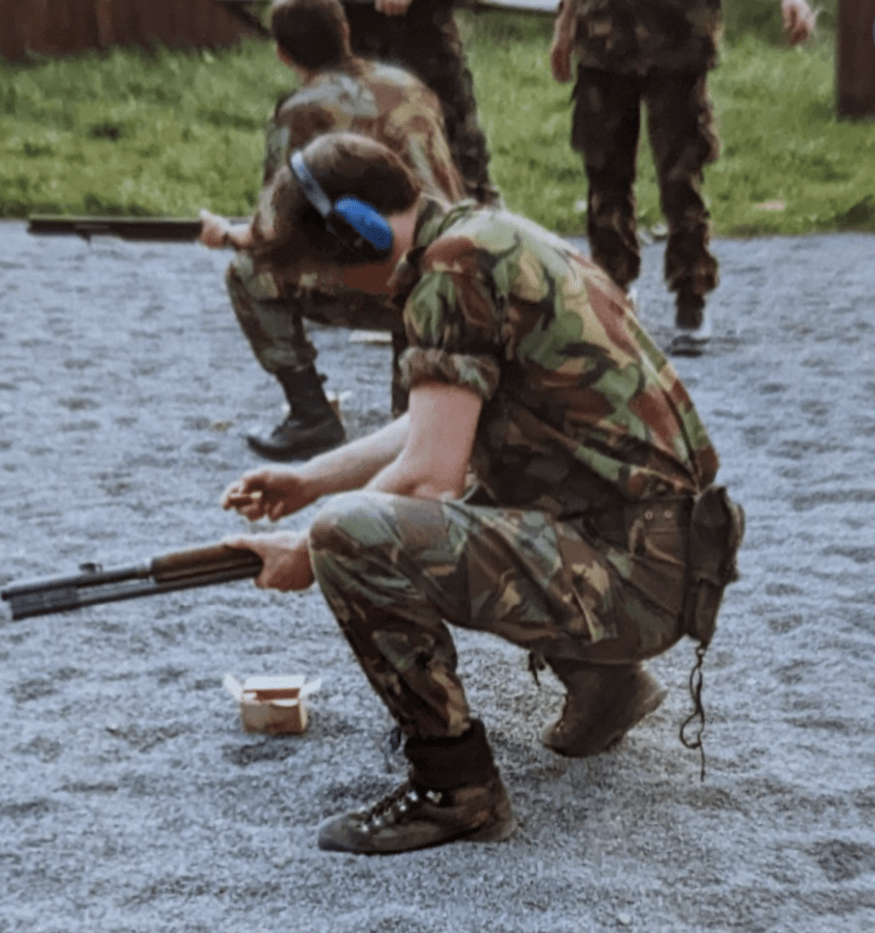
SMOCK CONTENTS
Your smock contained everything you needed immediately to hand. Once fully loaded it weighed a few kilos on its own.
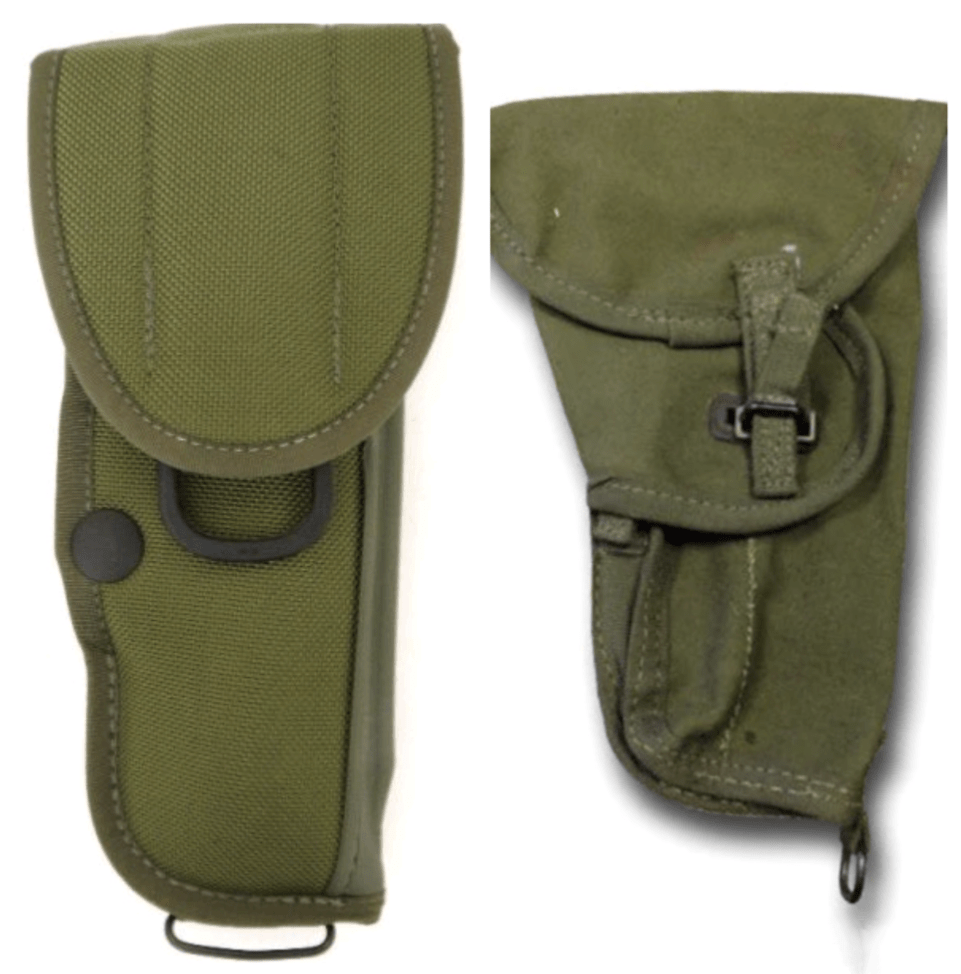
- 9mm Browning pistol. The only holster on issue at this time was the 58 pattern which was useless. Many carried their pistol in the inside pocket of a smock (those with an intense fear of losing it would stow it in the top flap of their grab back or bergen for the duration of the exercise). One magazine was fitted to the weapon and a spare usually carried in another pocket to prevent noise. Not ideal but if captured you may have had a chance of getting the weapon through a first cursory search depending on the quality and training of the soldier. On a visit to the American PX Bianchi holsters could be bought, these were good for the time and had a flexible clip system for belt kit attachment. Others tried commercially purchased shoulder holsters, but I thought them impractical.
Map. Maps for immediate use were usually carried down the front of your smock or in the side pocket of the jungle trousers. Remaining maps were generally carried in your daysack. Every patrol member had their own mapping.
Silva compass. This was generally carried in the top right pocket. Some would remove the pocket from the shoulder of the smock (meant for a first field dressing), sew it on the front and keep their compass there.
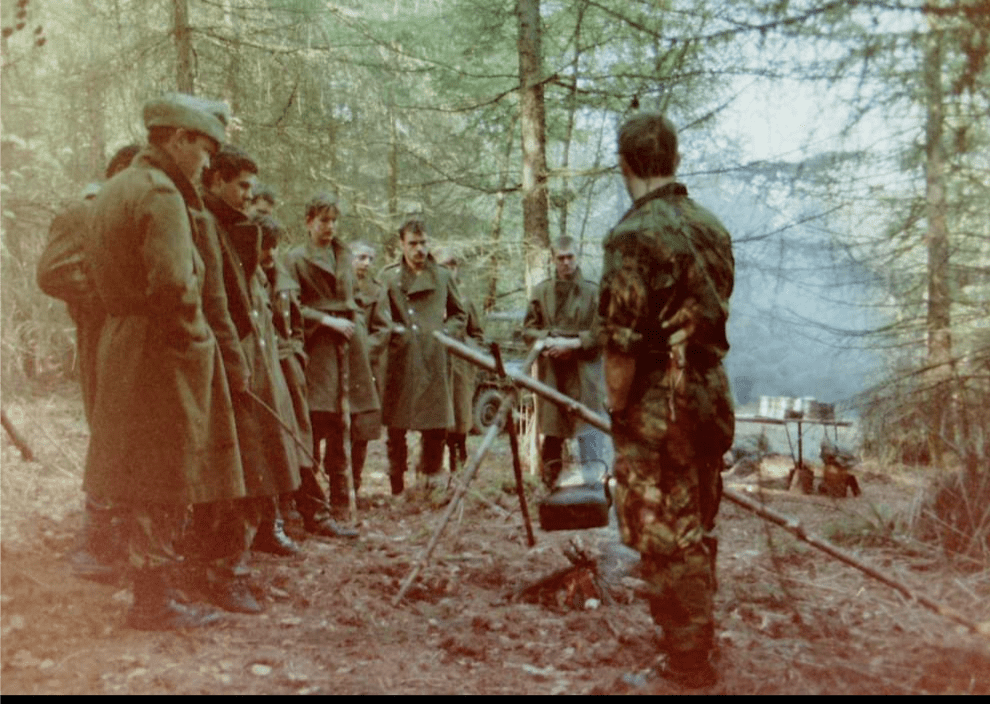
Escape tin. This contained items such as a button compass, snares, water purification means, wire saw and fire-starting kit to be used in event of a Survive, Evade, Resist, Escape (SERE) situation. In war time a lot of the contents would have been secreted in your smock and trousers. A week’s survival training was included as part of preparation for the role. Once in the patrols soldiers would have to attend and pass an external survival course with a 24hr resistance to interrogation phase at the ILRRP school at Weingarten. For promotion to Sergeant you would have to pass the Army Combat Survival Instructors course at Hereford run by 22 SAS. This also included another 24hrs resistance to interrogation phase so you got to do it twice. It was much less fun second time around. You can listen to our podcast on SERE and resistance to interrogation training below.
Command kit. Waterproofed and carried in top right pocket. Notebook, pencil, protractor RA (used for planning artillery fire missions), lumocolours, hele flashcard and aide memoires. Torch (maglites were favoured) with red lens.
Trauma Kit. SOP dictated these items had to be carried in the top left smock pocket. 2 first field dressing (FFD). 2 x crepe bandage as the bandages on the FFD would be torn off and crepe bandages used instead. This meant more wound pressure could be applied. Mucus extractor. No tourniquets issued and improvisation was taught. Looking back the use of tourniquets would fall in and out of favour in conventional training. We were always taught to use them especially after attending the ILRRPS Patrol Medic course. Many of the instructors were US Army with combat experience in Vietnam and had practical experience of the use of tourniquets.
Morphine autoinjector. SOP was to be worn around the neck with ID discs. These were taped together, and the metal necklace usually replaced by paracord.
Binos. In the days before rifle optics, binoculars were usually worn around the neck on patrol or stored in the grab bag. Many of the lads purchased their own small civvi binos or monoculars to fit in a smock pocket. Military binos had to be used for adjusting artillery fire as they had lens graticules specifically for this purpose.
Wooden spoon. AKA racing spoon (no idea why but probably because food was always eaten quickly). Reputed to be quieter than a metal one they were bought from civvi shops. The handle would be cut down so it could be used for cooking and making brews. Greedy bastards would leave the handle a bit longer to give them the edge if you were eating an all-in scoff. In the days of tinned rations it usually had one of the small issued tin openers attached. Once scoff was finished it was licked clean before being put back in a pocket but despite this lack of hygiene no one ever seemed to get the runs.
Cam cream. Usually Army issue. The vainer would commercially purchase in order to perfect their “look” usually modelled on Arnie in Predator or Vietnam era tiger stripes. Never really mattered because 5 minutes into a patrol with over 60kg on your back it sweated off.
Pocket knife. Down to personal taste from the issued army lock knife, a Swiss Army knife to more expensive options such as a Leatherman or Gerber. Usually purchased from the PX and worn in a pouch on a trouser belt. Rambo type knives were never acceptable but MOD survival knives or machetes, usually carried on the bergen were OK and used for OP construction. I never thought the weight was worth it when a decent pair of secateurs were just as good. Lanyards made of paracord were usually attached with the excuse being that it could be used in a survival situation. The actual reason was it looked ally.
Toothbrush and paste. Despite warnings that the enemy could smell toothpaste from 1 Km most lads brushed their teeth daily if the opportunity allowed. We rarely washed as it wasn’t possible and water was always scarce but if we did it would be crutch and armpits only. Brushing your teeth was a great morale booster. The super ally would use bicarbonate of soda because it didn’t smell.
Other points. Most carried a rifle magazine in a pocket when deployed in OPs in case they were bugged out and didn’t have time to get hold of their belt kit. Sweets/chocolate were also usually carried for easy access especially on infil/exfil patrols. I usually carried toilet roll in waterproof bag in my smock and a lighter for cooking.
SPECIAL OP TROOP BELT KIT
The primary aim was to be able to fight and survive off your belt kit if separated from everything else. It was never envisaged that deliberate offensive action would be taken therefore ammunition scales were light. Usually 6 magazines, a couple L2 and smoke grenades. Signal flares were normally carried by the patrol commander. Any contact with the enemy was likely to be on a patrol or, if compromised, in an op or the main hide. In either case the aim was to break contact quickly and aggressively.
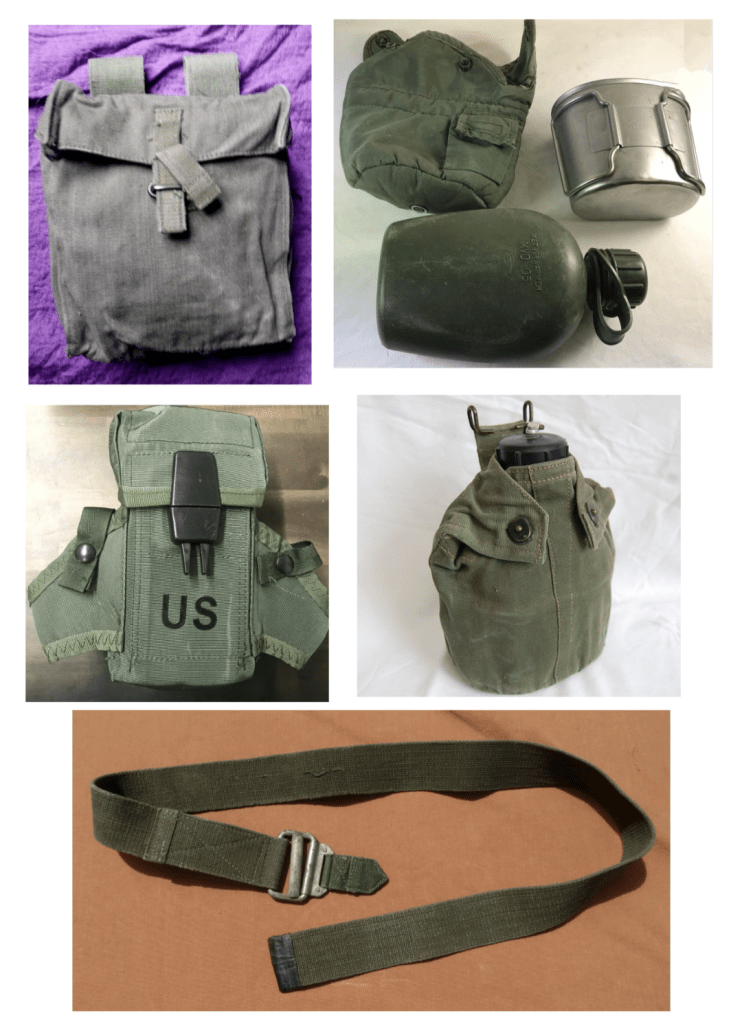
A typical belt kit set up would be:
- US Army M16 ammunition pouches x 2. These easily accommodated SLR magazines but were more compact than 58 pattern webbing ammo pouches with better fixings.
- SAS escape pouch. 24-hour Emergency rations, hexamine, foot powder and communications (comms) cord.
- US water bottle pouch. Containing water bottle, water sterilisation tablets and metal mug. A small metal cooking platform that fitted onto the end of the mug was also used as it was ideal for brewing up with hexamine blocks. Small commercially purchased folding hexe cookers were also used.
- 44 Pattern water bottle pouch. British army issue water bottle and mill bank bag (simple, but effective water filter used to remove objects from a source before sterilisation).
- Roll pin belt. This was an excellent bit of kit. It could be adjusted quickly which was especially useful when wearing an NBC suit or bulky cold weather clothing.
- Prismatic compass. Could be carried in an issued 58 pattern webbing or commercially purchased pouch.
- Loop line and carabiner. Used for river crossings.
- 58 pattern webbing yoke. Hooked on to the belt and distributed load carry to the shoulders.
- Respirator pouch. Contained S6 later S10 respirator, detection paper and decontamination powder and blotting pads (DKP 1 & 2). Some chose to have a second respirator pouch on their belt for their NBC suit but this made it very bulky. The upside was that you didn’t have to wrestle it into a 58 pattern NBC roll that would sit on top of your webbing. Others just carried it in their daysack.
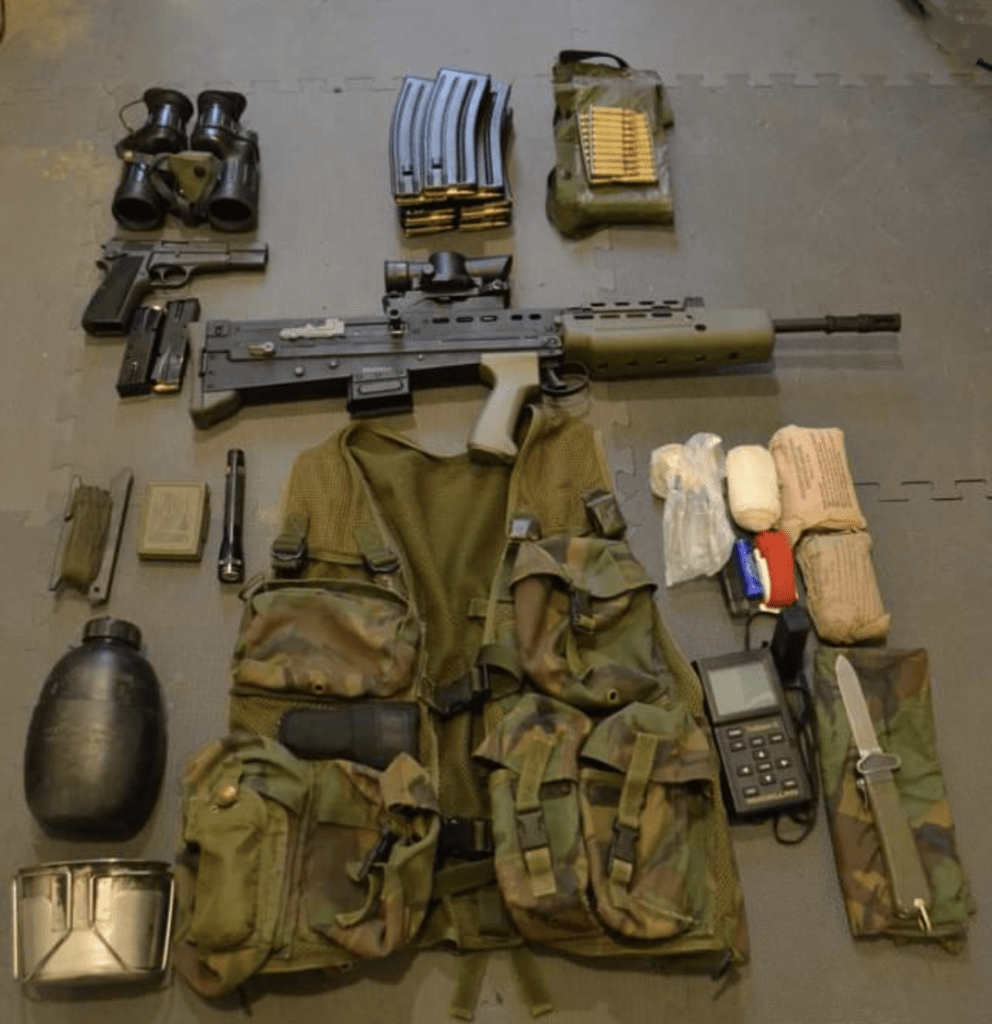
Other soldiers preferred load carrying vests such as those designed for Close Observation Platoon (COP) operations in Northern Ireland. Vests by Arktis became popular in the late 80s and throughout the 90s. The much improved 58 pattern webbing replacement known as 85 pattern Personal Load Carrying Equipment (PLCE) proved popular when it came into service in the late 80s as did the bergen that came with it. Chest webbing was occasionally used but wasn’t that popular for patrol work but was considered worthwhile if vehicle mounted or for ops in Northern Ireland. Chest rigs and vests were usually purchased by the individual.
SPECIAL OP TROOP DAYSACK/GRAB BAG
Your daysack contained additional items that would enable you to survive for longer than belt kit alone. If separated from your bergen it was always with you.
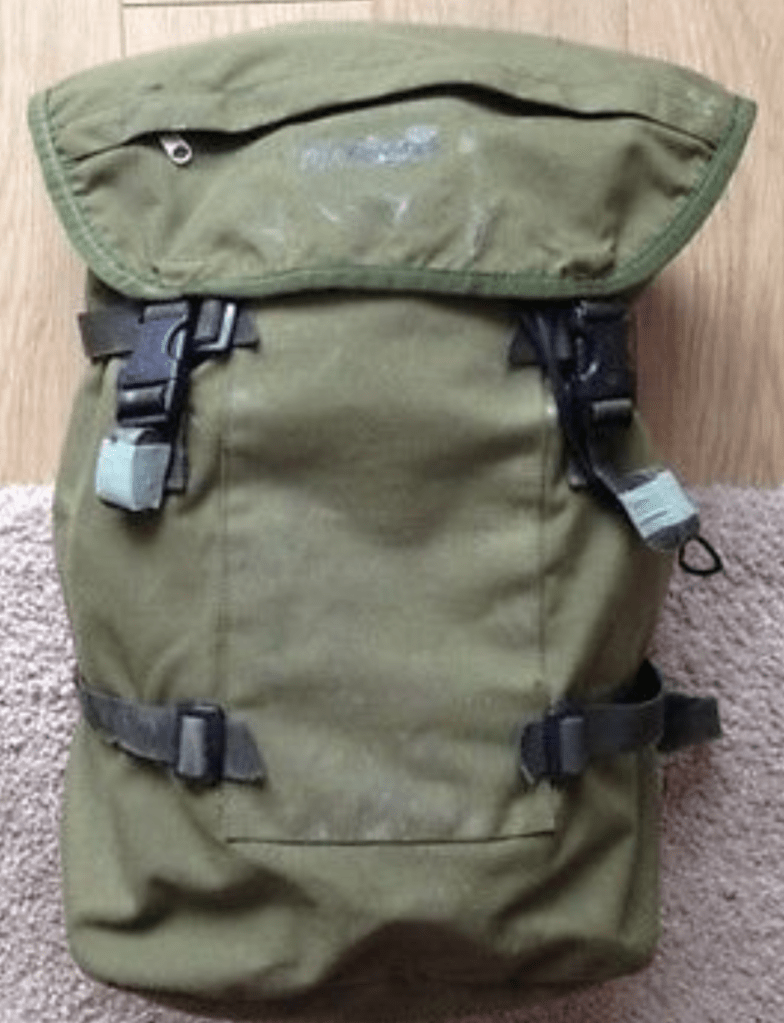
If on patrol then it was carried under the top bergen flap where it could be easily released if you had to abandon it. Back in the 80s daysacks weren’t general issue so were another item you purchased and the Berghaus Munro, still seen today, was a firm favourite.
Typical contents were:
- Waterproof jacket and trousers. Usually a commercially purchased goretex jacket. Unlined Barbour waxed jackets were also popular. I never carried the issued waterproof trousers though others did. Once goretex was issued I did carry the full set.
- Warm jacket. Helly Hansen fleeces were popular as were Snugpak softie jackets.

- Spare socks. Issued arctic socks or commercially purchased hiking ones.
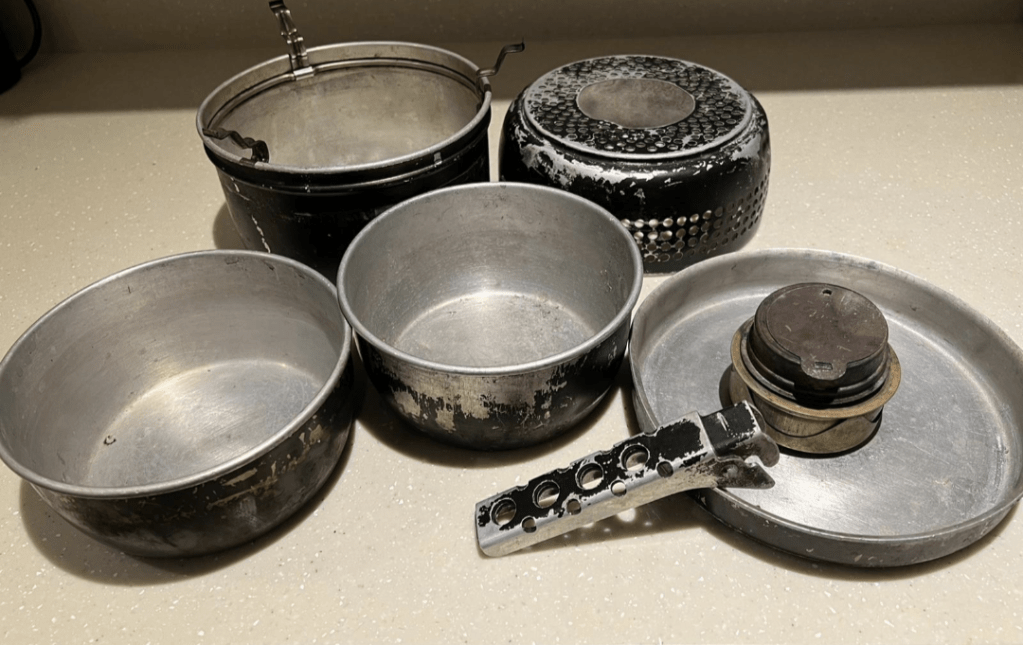
- 24 hr rations, cooker and fuel. Food was usually enough for one main meal with snack items such as chocolate and AB biscuits. Plentiful brew kit was always carried. Trangia (reliable and robust though not fuel efficient in cold weather) or peak (efficient and quick but tempermental) stoves were popular.
- Headtorch. Petzl, commercially purchased.
- Goretex bivvy bag. Issued item.
- NBC Suit & boots. NBC was constantly practiced as a major threat during the Cold War.
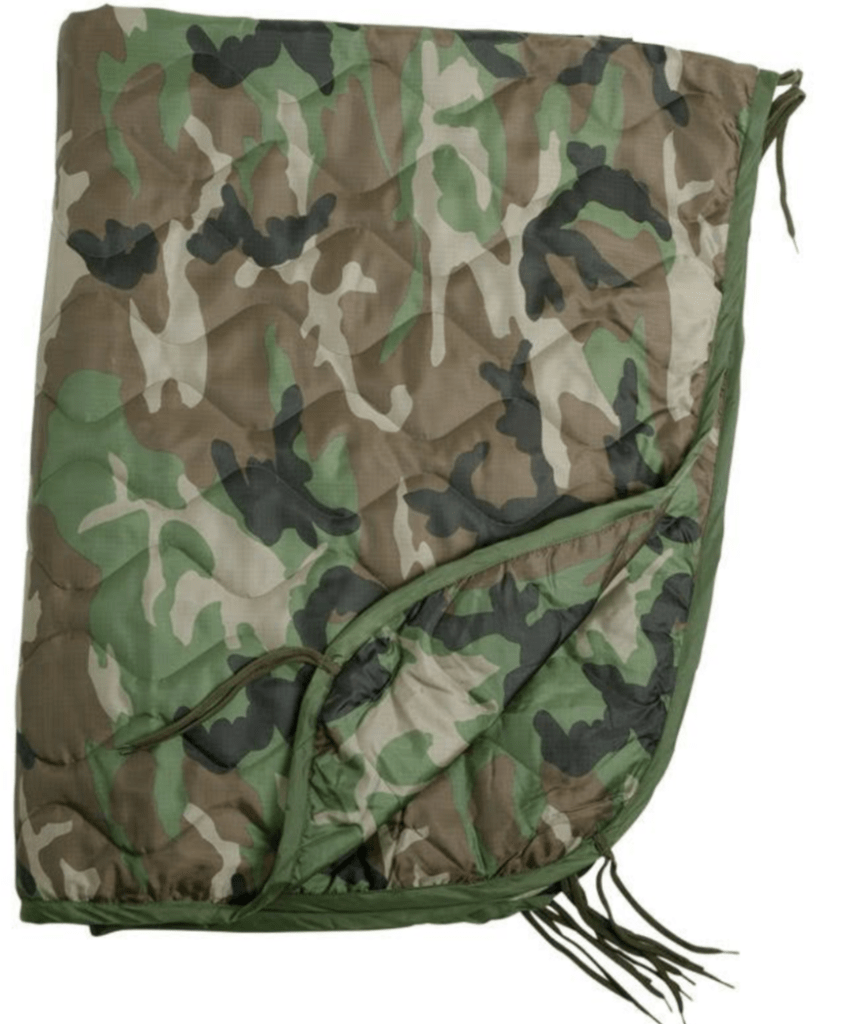
- US Army poncho liner. This was a thin padded blanket designed to be tied into the issued US poncho. A great bit of kit usually obtained when working with the Americans or bought in the PX. Useful in OPs and was great for providing a bit of warmth in a variety of situations.
- Passive night goggles. This or other night vision sights such as the rifle Common Weapon Sight (CWS). Spare batteries for these also carried.
SPECIAL OP TROOP BERGEN CONTENTS
Your Bergen carried some of your personal kit but mostly patrol equipment required for the task.
Personal equipment
- Sleeping bag. The issued down arctic sleeping bag was popular. During summer months commercially purchased civilian lightweight bags were used.
- Wash kit. A very basic wash kit was carried. Shaving was only done if the NBC situation warranted it.
- Basha/poncho kit. A basha or poncho is the name given to a tarpaulin. shelter sheet. The issued British Army poncho at the time was heavy, with a hood as it was designed to be worn as a waterproof cape. Most preferred the Australian jungle basha or a lightweight US Army poncho. Pegs and paracord or bungees were used as fixings.
- Boot cleaning kit. Usually dubbin rather than polish to aid waterproofing.
- Cooker & fuel. Hexamine blocks contained in a folding metal cooker were standard at this time though not suitable for the role we were in. SOP was to carry one cooker per two soldiers but in practice many carried their own despite the extra weight involved. Trangia and peak stoves were popular. The trangia, which used meths as a fuel, was virtually indestructible. Its downside was a lack of efficiency in cold weather and relative bulkiness. The peak used petrol and boiled water extremely quickly in all seasons (it was issued to soldiers exercising in Norway where naptha was used) but was temperamental and needed maintenance in order to ensure reliability.
- Rations. 5-7 days rations were carried depending on the job or length of expected infil/exfil. Weight was reduced by only having one main meal supplemented by snacks and chocolate from each 24hr pack. It was common practice to carry self-purchased dehydrated noodles as they were light and a good supplement.
OP kit.
- Personal cam net. 2m x 2m in size.
- Secateurs. For cutting foliage when constructing a surface OP.
- Hasty option OP kit. This was used to provide shelter in a surface OP. Constructed of chicken wire, waterproof tarp and hessian it was also approximately 2m x 2m. One or two carried per patrol depending on number of OPs.
- Piss bottle. Usually a plastic container about 1.5L capacity. One for each OP. Army issue anti-freeze containers were preffered as they were green and you couldn’t see the contents through them.
- Cling film. Wrapped around cardboard and used to parcel up crap when defecating in the OP.
- Shovel/pick. One of either carried by each patrol member.
- Sandbags. ~6 per soldier to be used in OP construction.
SPECIAL OP TROOP OPTICS
Optics as you would expect were fundamental to observing the enemy during the day and night. The devices below were shared amongst the patrol along with the batteries required to power them.
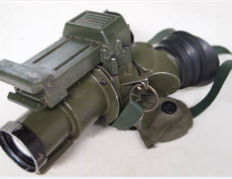
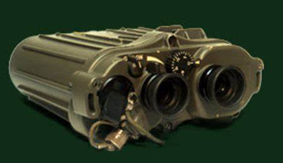
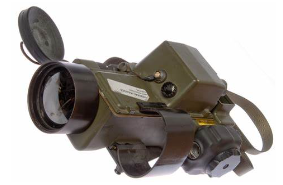
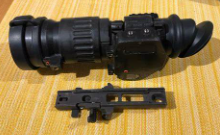
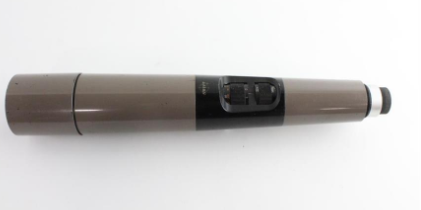
From top left clockwise; PNG, LP7 laser binos, Spyglass thermal imager, Swiftscope and CWS weapon sight.
Spyglass. This was a thermal imager that required a compressed air bottle to cool it and ran off a battery pack powered by AA batteries. A good bit of kit at the time but could eat up compressed air bottles and batteries if used for protracted periods of time. However, it provided an excellent all-weather capability.
Swiftscope. This was a commercial off the shelf purchase spotting telescope mounted on a tripod.
LP7 laser binos. Used for obtaining accurate distances to targets. Hand held or mounted on a tripod.
Passive Night Goggles (PNG). First generation. These were generally used by the lead scout as we only had one per patrol. Required a lot of ambient light to be effective so were not particularly good in the confines of a dense German wood.
Common Weapon Sight (CWS). This was a huge improvement over the Individual Weapon Sight (IWS). Smaller, lighter and much more effective it was mounted on the SA80 rifle. Usually, we had one or two per patrol. Highly effective when taken off a rifle and used in an OP for surveillance. Usually only one or two in each patrol.
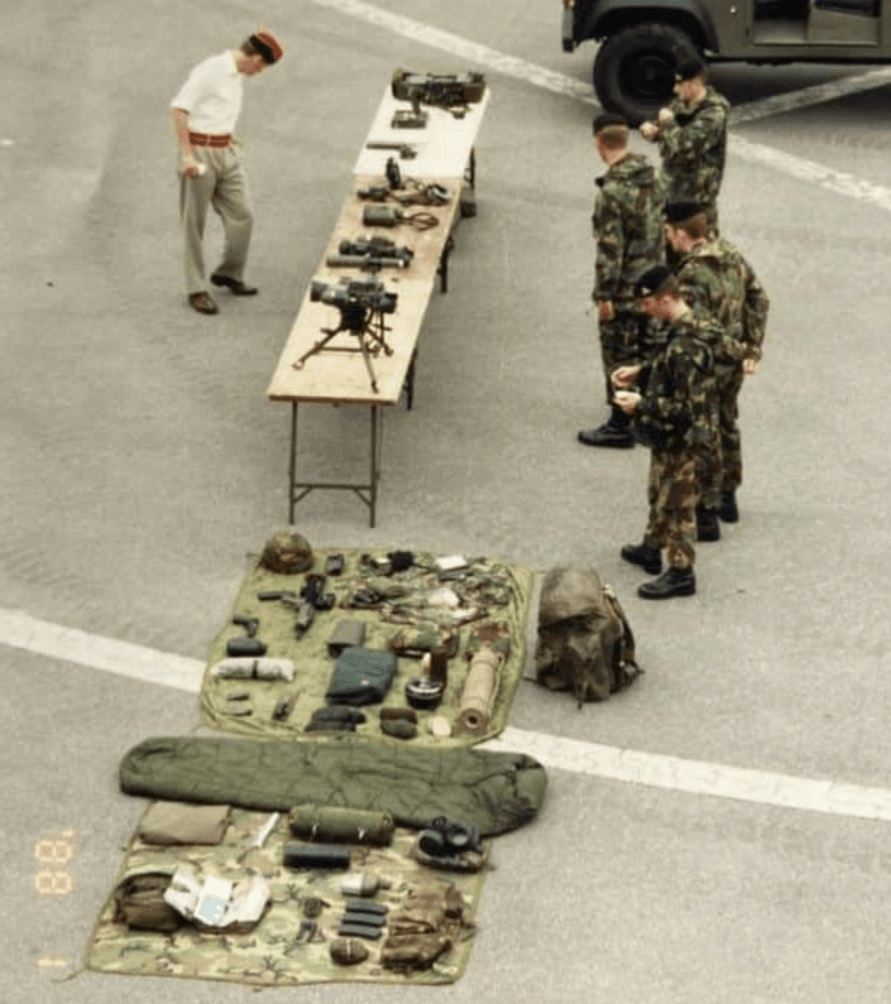
SPECIAL OP TROOP MEDICAL KIT
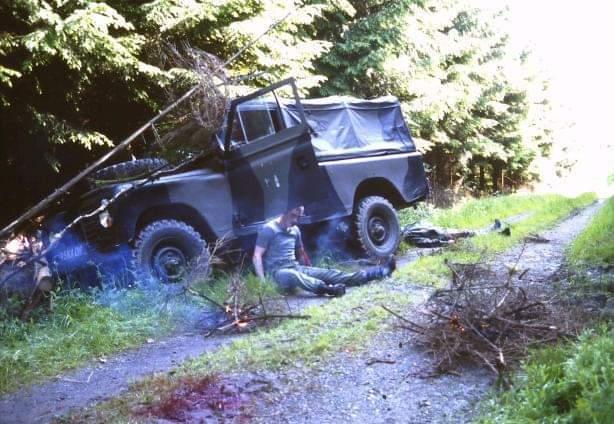
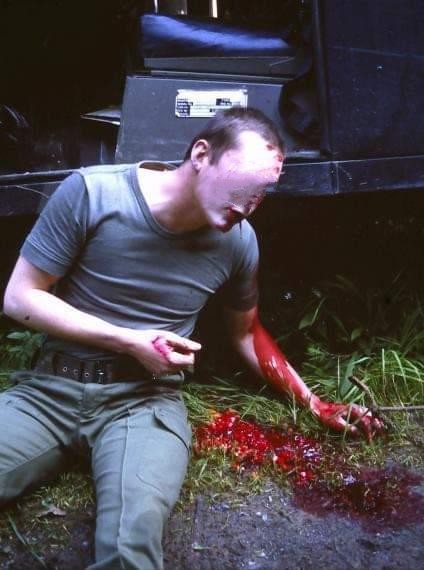
One member of the patrol was trained as a patrol medic. This involved completing the ILRRPS Medic course and undertaking attachments at the Regimental Medical Centre and at one of the British Military Hospitals in Germany. Every soldier undertook more advanced training on the selection course and had much better skills than your average soldier. The patrol medic would carry the med pack whose contents focused on dealing with gunshot and shrapnel wounds beyond the first field dressings and morphine carried by the individual. The medic would also have to carry his share of patrol batteries and other kit.
SPECIAL OP TROOP SIGNALS EQUIPMENT
Due to the distances involved all comms back to the command post (CP) was by high frequency (HF) communications. Up to the mid 80s the primary means was by use of the PRC 320. The designated signaller in the patrol carried the radio equipment in a “bug out” daysack under the top flap of his bergen. Batteries were shared amongst the other patrol members.
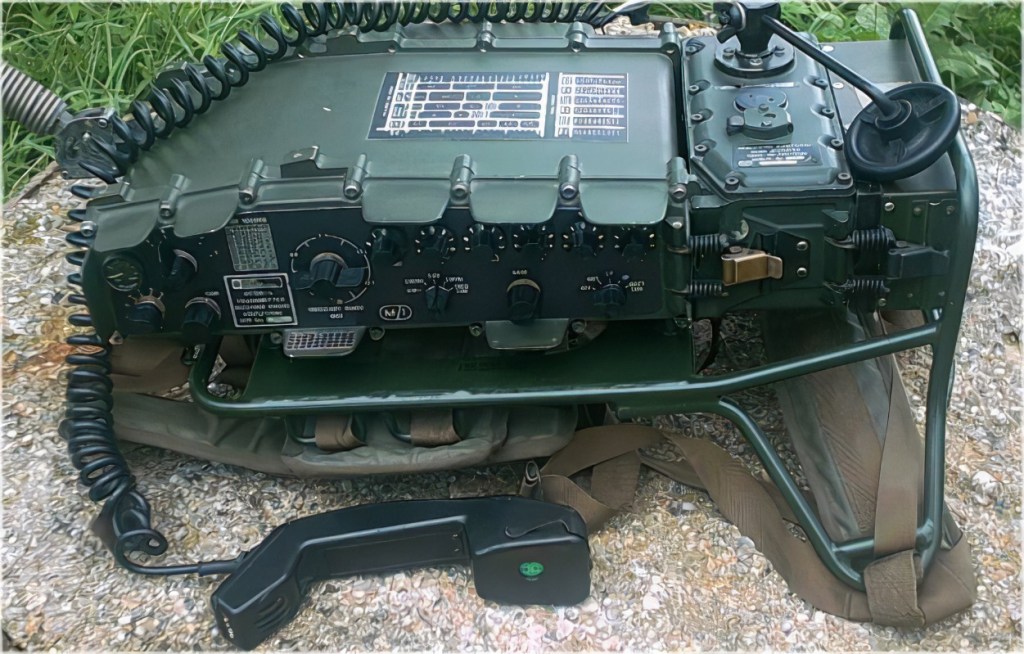
Around 1988 the 320 was replaced by the PRC 319 a much more capable and easier to use system. Its primary attribute was that the antenna could be remoted up to 50m away from the set. Especially useful when working from the main mexe hide.
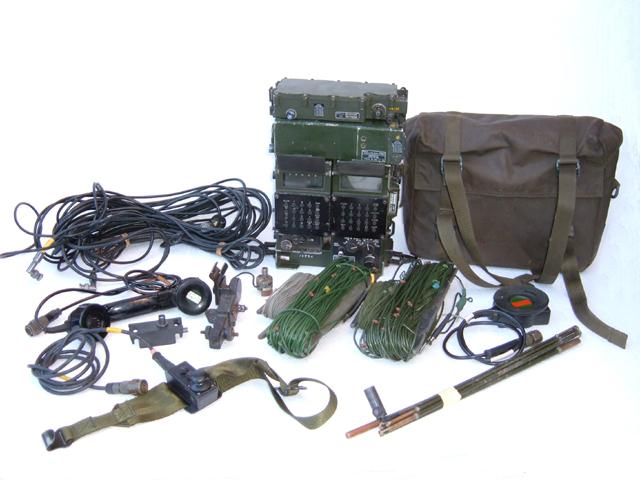
All communications were by burst transmission using the Digital Message Handling Device (DMHD) with the PRC 320 and Transmitting Device Electronic Data (TDED) with the PRC 319. To do this, messages were encoded using a one-time pad (OTP) which was a system used by SOE agents in WW2. A series of numbers was then entered into the DMHD and transmitted to the CP often over 100km from your position. In extremis morse could be used as a backup but only in a dire emergency as it can be easily direction found (DF) by enemy electronic warfare (EW) units of which the Soviets had many who were highly capable.
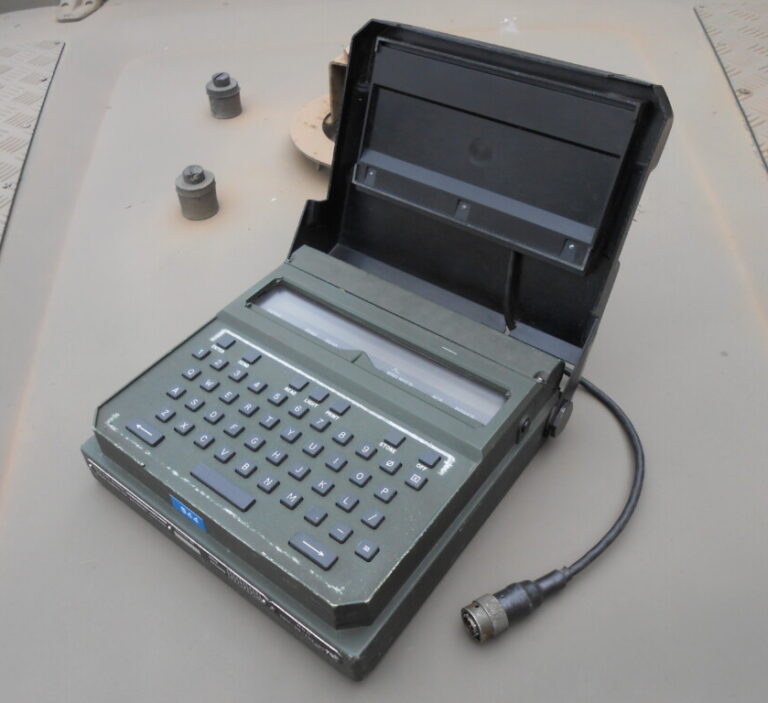
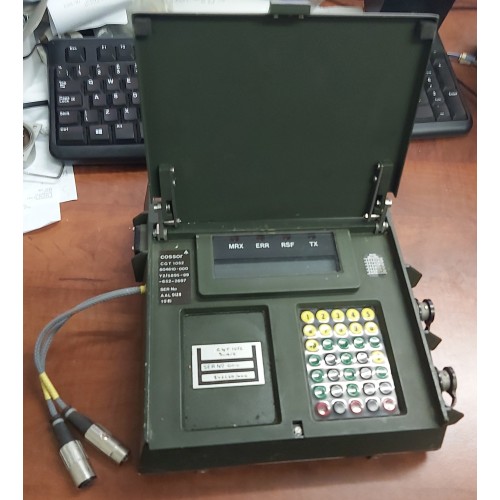
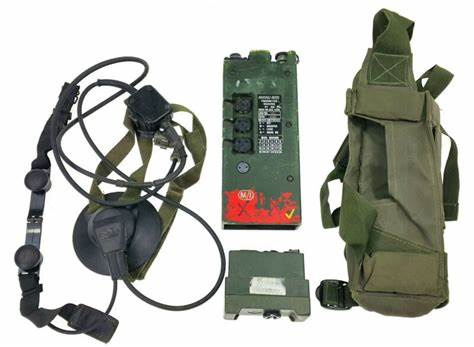
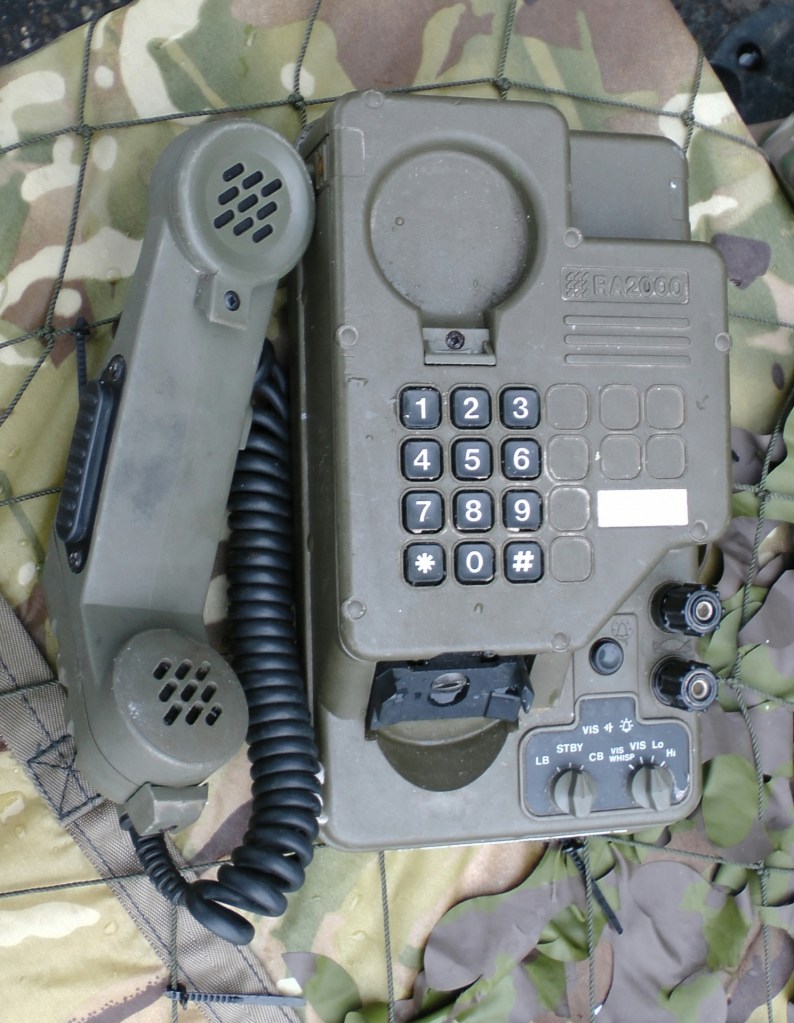
For short range comms up to a couple of kilometres in the open, but greatly reduced in the dense woodlands of Germany, the patrols were issued with at least 3 PRC 349 radios. One for each OP and one for the main mexe hide. These were only to be used as a back up because the main means of comms to the mexe from the OPs was by field telephone through dug in and camouflaged land line. Not only was line more secure it was a DF prevention measure too.
SUMMARY
The “stay behind” OP role was unique during the Cold War and those selected were amongst the best trained in the Army of the time outside Special Forces. They were highly professional and capable of working on their own or in a close knit team. Operating deep behind enemy lines they had to rely on their skills, guile and training to survive without immediate support. If the armour and infantry of 3 Shock Army had crossed the Inner German Border, I have no doubt the long-range guns and rockets of the Royal Artillery would have been used to devastating effect by patrols operating from their concealed, dug in OPs.
If you have enjoyed this blog and any of our podcasts, we would appreciate you sharing on social media and leaving us a review. Feel free to comment or leave questions at the bottom of the page. Thank you for your support.
Copyright © 2022. All rights reserved by the author Colin Ferguson. No part of this work may be reproduced in any form or by any means without prior permission in writing of the author.
 Unconventional Soldier Blog
Excellent post. I am currently updating my book on Royal Artillery Terms and Abbreviations (currently 813 A4 pages). In fact, it is gradually evolving into an encyclopaedia of the Regiment. Could I use some of the content from this post in my book, with suitable acknowledgment?
Keep up the good work, I haven’t heard a single boring podcast so far.
As ever
Phil
LikeLike
Hi Philip. Thank you for reading and taking time to comment. Also for listening to the podcast. I thought writing a blog was an effort but you put me to shame! Feel free to use what you need. All the best
Colin
LikeLike
Many thanks Colin, I don’t know about putting you to shame, you have achieved this over a couple of years. I have been writing this book for upwards of twenty five years.
As ever
Phil
LikeLike
Fergie. What a great summary! Brilliant.
LikeLike
Thank you David.
LikeLike
Excellent read, I’m on tour at the moment for 9 months in the Congo and enjoyed having memories brought back through your excellent description. Thanks for the post.
LikeLike
Cheers Martin. Thanks for reading and stay safe out there.
LikeLike
Great read. Remember a few of the guys in OP Troop, couple of guys from my Bty went there and played rugby with a few with 5 Regt. Been following on Twitter for a while and just getting into your podcasts now
LikeLike
Thanks for taking the time to read and comment Tim. Pls spread the word about the blog and podcasts 👍
LikeLike