


In the next episode of The Unconventional Soldier podcast, I speak with Mark “Splash” Aston about his military career. We discuss his early army life, training for selection and the 1982 Falklands war when his SAS squadron was instrumental in key operations against Argentine forces.

Joining the Gloucester Regiment
Splash enlisted in the British Army in 1964 at just 15 years old. As a local boy from the Forest of Dean, joining the Gloucester Regiment felt like a natural choice, especially with family ties to the unit. After completing training, he joined the battalion in 1966, a mere 15 years after the Battle of Imjin in Korea. Some of the veterans from that battle were still serving, mostly as Sergeants or NCOs.
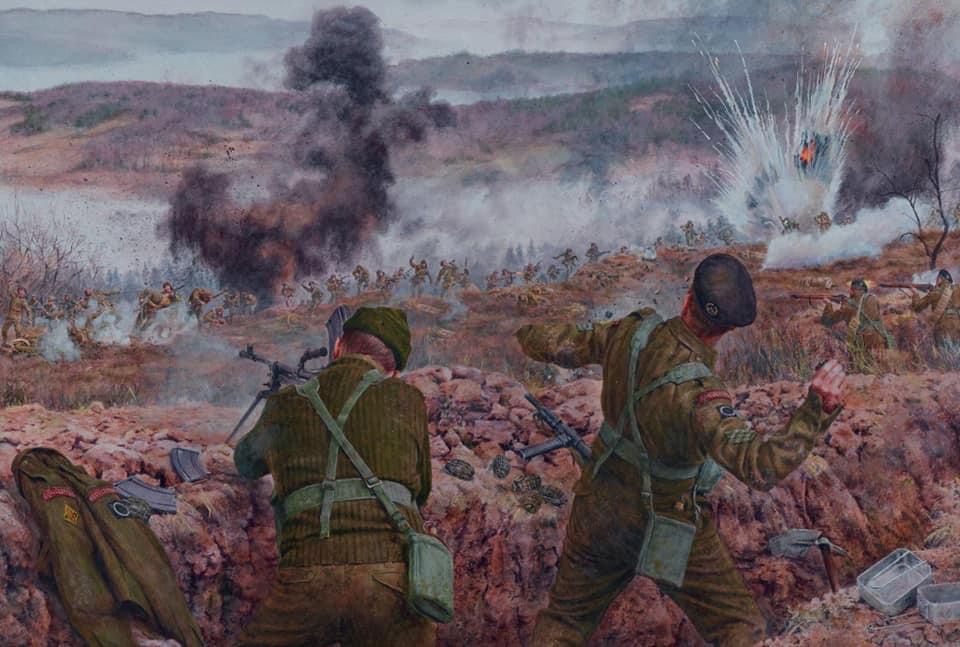
The Battle of Imjin, fought in April 1951, was one of the most intense engagements involving British forces. The 1st Battalion, Gloucestershire Regiment, was stationed on a series of defensive positions along the Imjin River when they were attacked by vastly superior Chinese forces. Over several days of relentless fighting, they defended Gloucester Hill against wave after wave of assaults, holding their ground despite dwindling ammunition and mounting casualties.
Ultimately, the survivors were forced to surrender or escape to their own lines, but their extraordinary bravery and resilience became legendary. The stand at Imjin helped delay the Chinese advance, buying crucial time for UN forces to regroup and prevented a significant breakthrough. The battle remains a defining moment in the regiment’s history, symbolising courage under overwhelming odds.
‘We had it pretty sticky for a few days – our casualties up to Wednesday were approx. 1000. The Gloucesters were over 600 and the other two battalions about 150 each.’
Letter from Lance-Corporal Arthur Stone to his parents – 29 April 1951
The younger soldiers regarded these veterans with immense respect, though extracting war stories from them was no easy feat. They rarely spoke of their experiences unless pressed. However, one exception was a former machine gun platoon Sergeant who had fought at Imjin and gave an unforgettable three-hour lecture on the harrowing battle.
SAS Selection
Despite a promising career in the battalion, Splash decided to pursue selection for the SAS in his late 20s as a Colour Sergeant. At the time, he was on track to become a Company Sergeant Major, but he felt opportunities for active soldiering were dwindling. Conversations with SAS members operating in Northern Ireland further fueled his interest. Preparing for selection involved an intense training programme, including long-distance runs, weighted marches, and swimming. All while balancing his duties on operations in Northern Ireland.
Among the four candidates from his battalion who went on selection, he was the only one to complete the process successfully. Once in the Regiment he joined D Squadron, Mountain Troop but transitioning from Colour Sergeant to Trooper required adjusting to a new environment where rank mattered far less than competence. For the first year, new arrivals were closely observed by their peers to determine if they were up to the high standards required of a special forces soldier before being accepted.
The Falklands War
As part of the SAS, Splash played a significant role in the Falklands War, beginning with Operation PARAQUET to retake South Georgia from Argentine forces. The mission faced extreme challenges, particularly when Mountain Troop encountered treacherous conditions on the Fortuna Glacier. The plan involved inserting onto the glacier by helicopter to conduct reconnaissance and prepare for an assault. However, the mission quickly turned into a disaster due to extreme weather conditions, including hurricane-force winds, whiteout conditions, and sub-zero temperatures. The helicopters struggled to land, and the SAS team found themselves trapped in a brutal blizzard, unable to move.
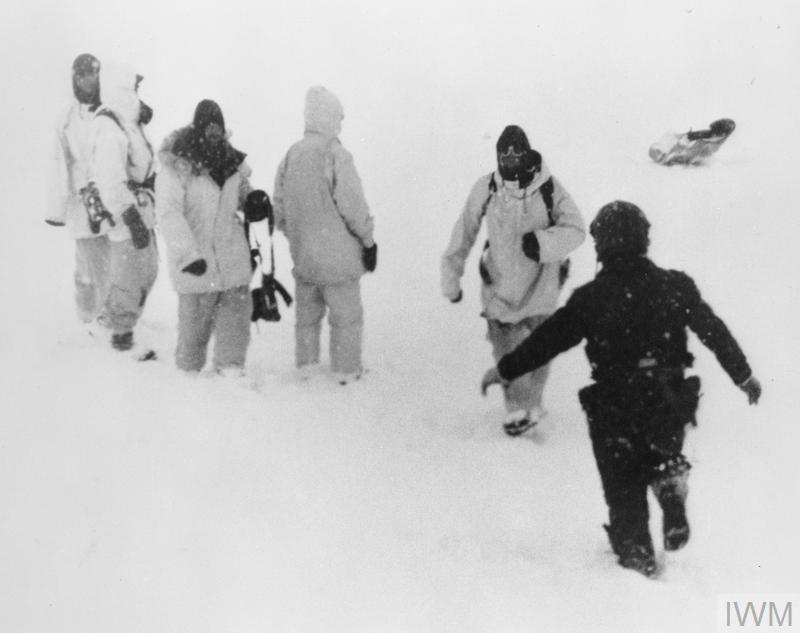
Eventually, the operation was aborted, and a dramatic rescue took place using Wessex helicopters, with two aircraft crashing but miraculously without fatalities. Despite the setback, British forces later regrouped and successfully reclaimed South Georgia. The incident highlighted the unforgiving conditions of Arctic-style warfare and the resilience of the SAS in extreme environments. In his book Splash reflects on the impact of the operation:
“As an SAS unit the Squadron came with a reputation and we had muscled our way into the party. We had been seen to have ignored advice, failed to deliver our mission and written off two expensive helicopters worth millions of pounds in the process. In short it had turned into a cluster”
The Pebble Island Raid
The SAS Pebble Island Raid took place on the night of May 14-15, 1982. The SAS supported by naval gunfire, launched a daring assault to destroy 11 Argentine aircraft, which posed a threat to British landing operations. Braving harsh weather and strong winds, the SAS moved swiftly, planting explosives on the aircraft and engaging Argentine forces in a brief firefight. The mission was a complete success, with all aircraft destroyed and the SAS withdrawing without serious casualties. The raid significantly weakened Argentina’s ability to conduct air operations in the region and demonstrated the SAS’s effectiveness in special operations warfare.

Surviving the Sea King Helicopter Crash
Splash recalls one of the most tragic events of the conflict when 22 soldiers including 18 from the SAS were killed. This happened when a heavily loaded Sea King helicopter crashed into the sea while transferring troops and stores between ships. While some managed to escape, the freezing waters and strong currents led to tragic losses. Splash, one of the few survivors, described the harrowing experience of being trapped underwater in his book SAS: Sea King Down:
“The helicopter turned on its side as it struck the surface. Its spinning rotor blades thrashed into the waves, biting deep into the water, as the weight of the roof mounted engines rolled the air frame over and forced it beneath the rising swell. The troop door imploded in a wall of freezing white water, flooding the troop compartment from the floor to ceiling. It all happened in an instant but somehow I managed to snatch a lungful of air as we turned upside down and went under.”
The incident marked the largest single loss of life for the SAS since World War II. Despite being medically evacuated to Canberra, a hospital ship, Splash ignored orders to return to the UK and rejoined his squadron for the rest of the campaign.
Operations On Mount Kent And West Falkland
Once back with D Squadron he deployed on further operations. First on Mount Kent, where the SAS played a crucial role in securing high ground ahead of the main British assault on Port Stanley. This feature was a strategically vital position overlooking key British approaches and had to be secured prior to further assaults towards Stanley. Despite several contacts with the enemy the Regiment effectively secured Mount Kent and relayed intelligence to British commanders, paving the way for 3 Commando Brigade’s advance. Splash’s final deployment was on West Falkland where his patrol was tasked to gather intelligence on Argentine troop movements and positions. The duration was briefed as 6 days but the team remained in situ for 11 days.
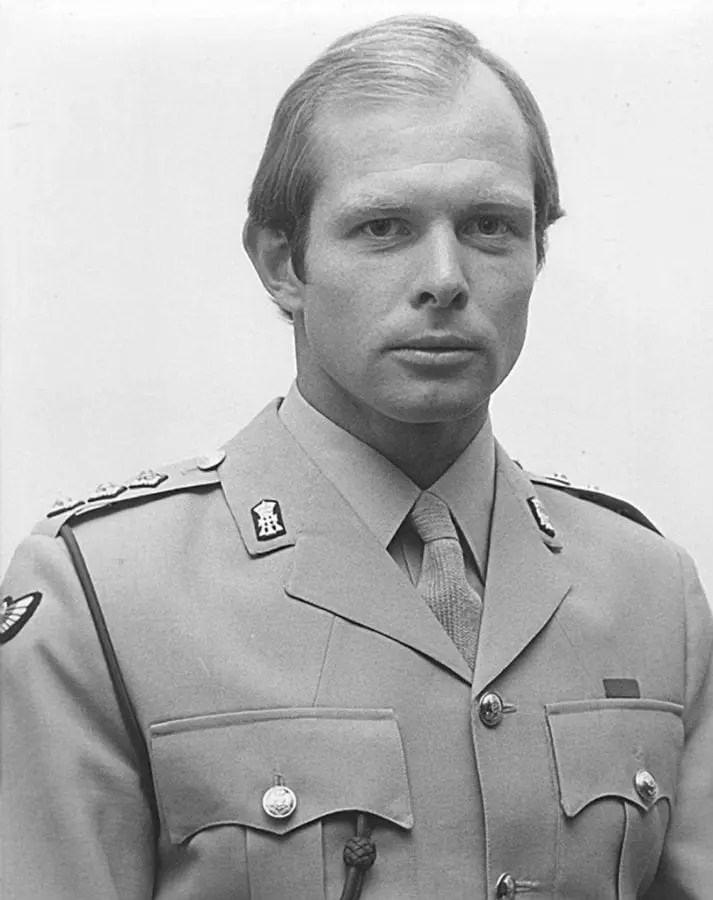
It was during this phase on 10 June 1982 that Captain John Hamilton was killed when his OP was compromised observing the enemy in Port Howard. Realizing the grave situation, Hamilton instinctively decided he and his signaller Corporal Roy Fonseca would attempt to fight their way out. The only possible retreat was behind them, but the exposed ridge left them vulnerable to enemy fire. Hamilton ordered Fonseca to run while he covered his retreat. Hamilton’s posthumous Military Cross citation outlines his actions:
“By dawn on June 10, Hamilton became aware that he and his radio operator were completely surrounded in their forward position. Despite being vastly outnumbered and lacking reinforcements, he made the decision to engage the enemy, instructing his signaller that they should attempt to break out. Knowing that their escape route was fully exposed to enemy fire, Hamilton initiated combat to give his signaller the best chance of moving first. During the exchange of fire, he suffered a wound to his back, making movement difficult. Nevertheless, he urged his signaller to escape while he continued to provide cover. A short while later, Hamilton was killed. His unwavering resolve and refusal to yield, even when faced with insurmountable odds and injury, demonstrated remarkable bravery. By deliberately choosing to hold the enemy at bay to allow his comrade to escape, he displayed extraordinary selflessness and duty. His final heroic act stands as an enduring example for future SAS soldiers.”
Fonseca was ultimately captured, while the other two members of the patrol evaded enemy forces. Just four days later, on 14 June 1982, the war concluded with Argentina’s surrender.
Reflections and Legacy
After returning from the Falklands, Splash continued his service, eventually becoming an instructor at the International LRRP School in Germany. Returning to the UK he later helped shape modern reconnaissance training in Warminster. His insights into soldiering, leadership, and endurance are captured in his book, SAS: Sea King Down. He reflects on the war without glorifying it emphasizing that success in the Falklands came down to superior training, professionalism, and adaptability. His story serves as an enduring testament to the resilience and effectiveness of Britain’s elite soldiers.

For those interested in a first hand account of special forces operations during the Falklands War, Splash’s book is available on Amazon and other major retailers. His experiences, alongside those detailed in Cedric Delves Across an Angry Sea, provide a comprehensive look at the SAS’s role in one of Britain’s most significant post-war conflicts.
Copyright © 2025. All rights reserved by the Unconventional Soldier blog. No part of this work may be reproduced in any form or by any means without prior permission in writing of the author.
 Unconventional Soldier Blog