
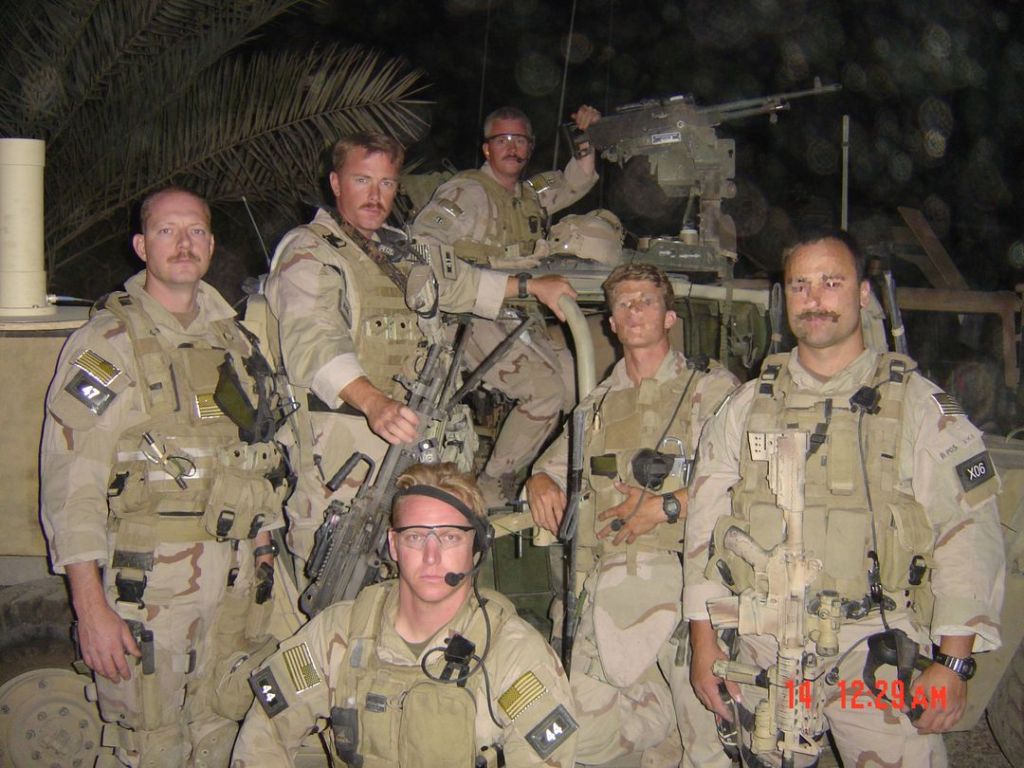
In a recent podcast episode I spoke with John A Dailey, a veteran of the United States Marine Corps, for a compelling conversation about his remarkable military career, the evolution of Marine special operations, and invaluable lessons in leadership and resilience. John, author of the book “Tough, Rugged Bastards,” shared candid insights that illuminate the demanding world of elite military units and the personal growth forged through combat.
The Path to the Marines and the Lure of Reconnaissance
John’s journey to the Corps began at an early age, driven by a fascination with Marines he observed and stories gleaned from his Navy veteran father. He enlisted in 1987 at the age of 17, right out of high school, during the Cold War era. Early in his career, he harboured a strong desire to become a Recon Marine, inspired by a recruiter who shared captivating stories and photos. However, an initial hurdle emerged as John wasn’t a strong swimmer, and the Recon tryouts were heavily focused on this aspect of fitness. This initial setback inadvertently led him down an unexpected but ultimately beneficial path.
Accidental Sniper
Because he didn’t immediately make it into Recon, John found himself mistakenly assigned to a sniper platoon after infantry training. This placement was initially resented by others as he jumped the gun on the normal career path, but it forced him to work incredibly hard to prove himself. This period of sniper training proved invaluable, as it honed skills like observation and report writing, which are highly similar to those used in reconnaissance patrols. John emphasises that this delay was a blessing in disguise, stating it absolutely made him a better Marine. Beyond sniper skills, his subsequent opportunity to serve with Marines guarding embassies abroad in places like Budapest (during the fall of the Berlin Wall in ’89-’90) and Argentina, broadened his understanding of military operations and interactions with other nationalities.
Ranger School
A unique aspect of his journey was attending the US Army Ranger course, a rare opportunity for Marines at the time, which earned him the nickname “Ranger”. He highlights that while Ranger School is essential for Army Ranger battalions, it’s also considered the Army’s premier leadership course, attended by many who will never serve in a Ranger Regiment.
The two-month course was an extreme test of endurance, conducted across four different geographic locations (Georgia forests, Texas desert, North Carolina mountains, Florida jungles/swamps). Participants typically receive only 2-3 hours of sleep and about 2,000 calories per day while expending around 10,000 calories, leading to significant weight loss (35-40 lbs for John). The core lesson wasn’t about tactics, but about learning one’s own limits and becoming a better teammate and leader under immense duress. This experience provided crucial in developing the mental toughness that served him well in later combat on operations.
First Force Recon: A Culture of Excellence and The Rise of SOCOM
Pre-9/11, life in the First Force Reconnaissance Company was characterised by a commitment to excellence, where every member was a “phenomenal performer”. During this period, the focus was on training and exercises, as there were few large-scale conflicts following the quick resolution of the Gulf War.
John sheds light on the lineage of Force Recon, tracing its connection back to the US Marine Corps Raiders of World War II, who were the first US special operations unit, mimicking the British Commandos. He notes a recurring historical pattern: special units are often raised during wartime, then disbanded post-conflict due to cost and their inherent tendency to “question authority” – a trait essential for decision-making in their environments but challenging for the broader military hierarchy.
The podcast delves into the formation of US Special Operations Command (US SOCOM), prompted by the failed 1980 Iranian hostage rescue attempt, which exposed severe interoperability issues between US military branches (e.g., incompatible radios). Activated in 1987, SOCOM unified special operations forces from the Army (Green Berets, Rangers), Navy (SEALs), and Air Force. Notably, the Marine Corps initially declined to participate, due to its “parochial” nature and reluctance to acknowledge any unit as “more special”.
Detachment One: Proving the Marine Corps’ Special Operations Capability
The events of 9/11 forced a change. Recognizing the need for more special operations forces in the Global War on Terror, SOCOM was tasked to grow, and the Marine Corps was told it had to participate. The solution was Detachment One (Det One), a small, two-year experimental unit formed in 2003 to prove or disprove the Marine Corps’ ability to interoperate within SOCOM15. John was one of four team leaders for this inaugural unit.
This integration brought significant benefits: Det One received improved equipment, weapons, body armor, and technology comparable to other SOCOM units, a substantial upgrade from the Marine Corps’ traditional “do more with less” approach. Det One’s 2004 deployment to Iraq as “Task Unit Raider” was instrumental in its success. John highlights that their effectiveness stemmed not just from their “door kicking” skills, but from a robust intelligence capability (comprising human, signals, and geospatial intelligence) that allowed them to “start from scratch,” to locate, capture, and interrogate targets.
Their mantra was “we will take any job available,” regardless of prestige, to prove their capabilities and get on the map. This willingness to undertake diverse missions, including sniper operations and providing personal security for Iraqi government members, cemented their reputation. John also candidly discusses experiencing “imposter syndrome” within these elite units, but used it as a powerful motivator to continually push himself and strive to earn his place.
MARSOC: Born Late, Born Well
The success of Detachment One directly led to the establishment of Marine Forces Special Operations Command (MARSOC), officially activated in February 2006. As Major General Peter Huntley, MARSOC’s commander, famously said, MARSOC was “born late but born well,” meaning it was forged in combat and operations.
MARSOC’s mission is to recruit, train, sustain, and deploy scalable expeditionary forces worldwide to accomplish special operations missions assigned by US SOCOM. John was crucial in designing MARSOC’s initial selection and training program. Unlike SEALs or Army Special Forces, MARSOC only accepts Marines who have already completed an enlistment, ensuring they are “known high performers” who volunteer for a second time. Candidates from any specialty can try out, from infantry to pilots and even band members.
The assessment and selection (A&S) process is challenging, with only about 25% of candidates making it through the two phases. Those selected then enter the 10-month Marine Raider Course (MRC), which covers everything from basic communications and medical training to small unit tactics, direct action raids, and reconnaissance. The ultimate goal is to develop the “cognitive operator” – someone who can infer, inform, influence, and fight.
John emphasises the importance of the correct mentality in special operations forces. He notes that while modern training is safer and more methodical, sometimes it loses the extreme mental toughness gained from constant, high-risk, low-resource operations of the past.
Lessons in Leadership and Transition
Drawing from his extensive experience, John offers leadership and performance coaching through his company Walking Point LLC. He imparts crucial lessons applicable beyond the military acknowledging that in combat and business, you’ll not rise to the occasion, you’ll default to your level of training. For veterans transitioning to civilian life, he advises finding a new purpose outside of military service, as the sense of serving something bigger than oneself is often lost. He also highlights the importance of translating intangible military skills – like problem-solving, teamwork, and getting things done on budget and on time – into marketable civilian terms.
“Tough, Rugged Bastards” and Desert Island Dits Picks
John’s book, “Tough, Rugged Bastards,” offers a deep dive into his life and the units he served with. For aspiring writers, his advice is simple: “just start writing”. He recommends journaling, even with no intention of publishing, as a way to process experiences and potentially uncover a talent for storytelling. Finally, for his Desert Island Dits picks, John selected Marcus Aurelius’s “Meditations,” a book that profoundly influenced his thinking as a warrior and a man, particularly during his time in Detachment One.
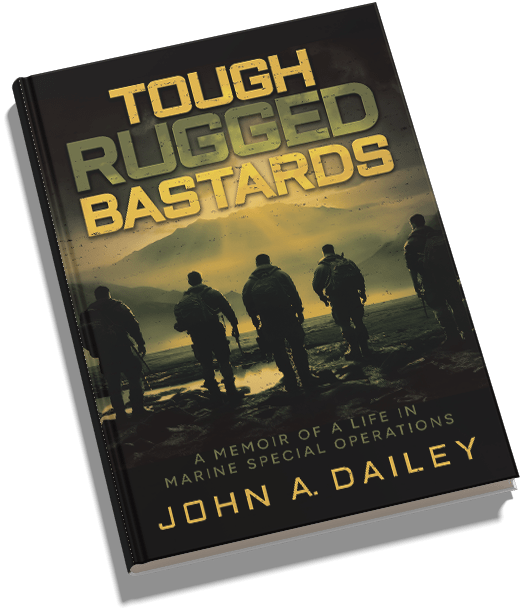
John’s conversation offers a rare glimpse into the rigorous selection, training, and operational demands of Marine special operations, highlighting the crucial balance between physical prowess, mental fortitude, and adaptive thinking in elite military units. Pick up a copy of his book, “Tough, Rugged Bastards,” available on Amazon UK and his website at https://www.jadailey.com/
Copyright © 2025. All rights reserved by the Unconventional Soldier blog. No part of this work may be reproduced in any form or by any means without prior permission in writing of the author.
 Unconventional Soldier Blog