


I read the The Narrow Road to the Deep North by Richard Flanagan some years ago when it was given to me by my wife. It’s a brutal book on love, memory, guilt and the scars of war and perhaps one I wouldn’t have chosen but I read it in a couple of days. It was a worthy winner of the Man Booker prize in 2014 and highly recommended. The story follows the life of Dorrigo Evans, an Australian surgeon in World War II who is a prisoner of war forced to participate in the brutal construction of the Thai-Burma Death Railway. As Dorrigo endures unimaginable hardship in the POW camps, he is also haunted by a past love affair and the weight of his post-war fame. Flanagan skilfully weaves past and present together to show the impact of war and what it means to be good in a world of suffering. I approached the recent BBC adaption with some trepidation but they have done a fine job with a much loved story. If you enjoyed the book and/or the BBC adaption you should have a listen to a podcast we recorded with John Tulloch author of the The Borneo Graveyard 1941-1945.
Unearthing a Forgotten Chapter of WWII
John Tulloch’s book, the subject of the podcast, is the product of 12 years of research, driven by his personal discovery of the Australian POW camp memorial in Sandakan, Sabah, in 1999. He was totally and utterly unaware of the horrors that occurred there, especially the three death marches from Sandakan to Ranau, where 99.75% of the POWs died, with only six Australian survivors. This shocking realization, coupled with the discovery that half the British POWs were from his own regiment, the Royal Artillery, and that there were no British survivors, compelled him to ensure something had to be done to bring this history to a wider audience.
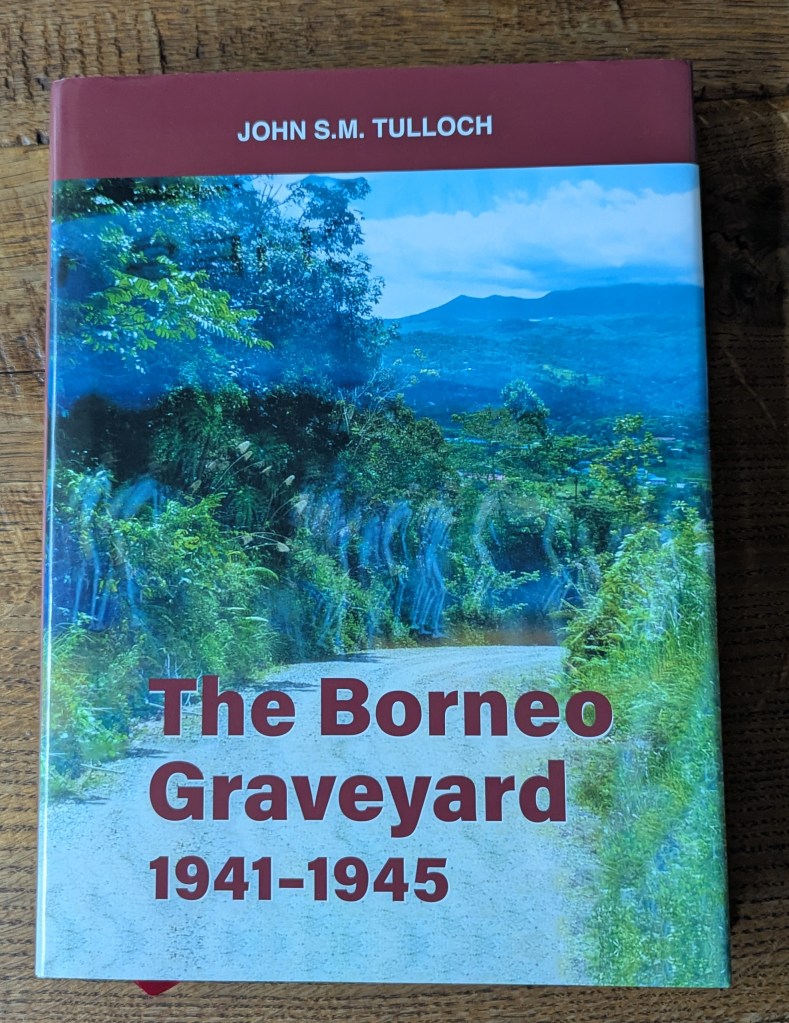
The podcast highlights that the atrocities in Borneo were largely unknown because, to the British, Borneo was not vital at all in the Southeast Asian war, and people simply did not want to know the horrors.The book recounts the formation of five Royal Artillery air defence regiments in 1939 and traces their journey to Southeast Asia in late 1942. After a brief campaign in the Netherlands East Indies, the soldiers were captured and held as prisoners of war in Java and North Borneo. It explores the Japanese invasion of Borneo and the brutal four-year occupation that followed. The narrative sheds light on the appalling conditions faced by Australian, British, Dutch, and Indian POWs in camps such as Jesselton, Sandakan, Ranau, Labuan, and Batu Lintang. Among the most harrowing episodes were the three Death Marches from Sandakan to Ranau.
The story also includes the experiences of civilian internees—men, women, and children—from across Borneo who were imprisoned in Batu Lintang. Many endured severe mistreatment by their captors, and some were either executed or killed during escape attempts or shortly before liberation.The local population suffered immensely under occupation, facing starvation, widespread disease, torture, and execution. In retaliation, tribal groups inflicted significant losses on retreating Japanese forces, with more than 8,000 enemy soldiers killed in Sabah alone.
The covert operations of Z Force are also detailed, highlighting their intelligence-gathering missions and support for local guerrilla resistance against the Japanese. Fierce battles marked the eventual Australian-led liberation of Borneo. After liberation, survivors underwent recovery on Labuan Island before returning to the UK—only to be met with silence and indifference, a common experience for many former Far East POWs and internees.
This powerful and sobering account captures the full scale of suffering and resistance in Borneo during World War II and is aptly titled The Borneo Graveyard, 1941–1945.
The Chilling Realities of Borneo’s POW Camps
Both the book and the podcast detail the brutal reality for Allied POWs in camps across North Borneo. Much like the “Japanese labor camp” depicted in The Narrow Road to the Deep North, the conditions were unspeakable:

Starvation and Malnutrition: POWs initially received 250 grams of rice per day, but this was reduced, and by January 1945, they received no rice at all, resorting to eating frogs, snails, and worms. This resulted in endemic malnutrition, starvation, and diseases like beriberi (a vitamin B deficiency), which caused legs to swell with fluid.
- Sadistic Treatment: Guards, often “the scum out of the big Japanese cities,” subjected prisoners to horrific abuse. This included:
- The “flying lesson,” where prisoners held their arms out with rocks, beaten if they dropped them.
- Confinement in “cages” (pig baskets) where one could neither stand nor sit, or “dog kennels” made of bamboo and barbed wire, often for days or months, with daily beatings.
- Appalling sanitary conditions, leading to widespread dysentery.
- The Death Marches: Three forced marches from Sandakan to Ranau claimed almost all lives. Prisoners, already in a “parlous state,” were given only four days of rice and were summarily executed by “killing squads” if they stopped.
- Cannibalism: John shockingly recounts instances where Japanese Kempeitai (secret police) butchered prisoners for “fresh meat” or took strips of flesh from their legs at night to add taste to their rice.
- Crucifixion: A senior British officer was crucified, disemboweled, and had a nail driven through his forehead after killing a pig for his starving men.
- Massacres: Beyond the POWs, the local population of Borneo also suffered terribly from torture, executions, and massacres, including 5,000 locals killed after an uprising in Sabah. Orders were even found for the mass execution of internee women, children, and nuns with poisoned rice, and men to be shot and burned, just days before liberation.
Why This Podcast Resonates with ‘The Narrow Road to the Deep North’
The Narrow Road to the Deep North has been critically acclaimed for its fierce intelligence in chronicling the inhumanity of war, its realism, and its compassion. If you were drawn to the miniseries’ or book portrayal of a Far East POW’s struggles then John’s discussion on podcast will provide a vital, non-fictional deep dive into the historical realities that underpin such narratives.
The pod vividly brings to life the strategic significance of Borneo (oil and wood) that made it a Japanese target, the unpreparedness of the Allied forces there, and the systemic cruelty driven by a twisted interpretation of Bushido that deemed prisoners worthless. It provides the crucial context for understanding the sheer scale of suffering and the desperate struggle for survival, which parallels Dorrigo Evans’s journey. By listening to John, you will gain a profound understanding of the forgotten sacrifices and unspeakable horrors faced by Allied soldiers and local populations in Borneo. It’s an opportunity to learn more about those who perished and about a chapter of World War II that was deliberately suppressed.
Copyright © 2025. All rights reserved by the Unconventional Soldier blog. No part of this work may be reproduced in any form or by any means without prior permission in writing of the author.
 Unconventional Soldier Blog