
“For these early stages of a war, the Allies had made plans to field Stay Behind capabilities, military as well as civilian, that would allow themselves to be by passed by an attacker in order to collect intelligence behind enemy lines, conduct target acquisition, and thus try and slow its advance.”
Tamir Sinai [1]
One unit involved in this Cold War planning was the Special OP Troop of the British Army formed in 1982 and responsible for engaging Soviet forces with the depth fire assets of the Royal Artillery. Other NATO nations also had units operating in the stay behind role and often these could be divided into two distinct functions:
- Military units tasked with training and organising civilian resistance movements or guerrilla forces.
- Military units tasked with carrying out Intelligence, Surveillance and Target Acquisition and Reconnaissance (ISTAR) tasks.
The concept wasn’t new and can be traced back to the Auxiliary Units of the Second World War and this blog will outline the development of the concept from its WW2 origins to the Cold War with a focus on the units tasked with conducting ISTAR operations:
1940 – Auxiliary Units formed to resist German invasion of the UK.
1942 – Op TRACER – Gibraltar based stay behind operation.
1957 – 21 & 23 SAS (R) Cold War stay behind operations commenced.
1962 – Special Reconnaissance Squadron (SRS) Royal Armoured Corps Cold War stay behind operations commenced.
1973 – Honourable Artillery Company (HAC) Cold War stay behind operations commenced.
1982 – Special OP Troop Cold War stay behind operations commenced.
I will finish with my thoughts on the possible use of this type of operation in any future conflict.
WW2 Auxiliary Units
“Operational patrols of up to 8 men deployed from specially constructed underground hides called operational bases where they were expected to survive and fight without any external support or resupply for several weeks.”
Auxiliary Units were raised in WW2, on the order of the Prime Minister Winston Churchill, to prepare for the possible invasion of the UK by German forces. Winston was a keen supporter of specialist units being instrumental in the formation of the Commandos, Parachute Regiment and SOE. Volunteers, though in uniform, operated as guerilla type forces however their use of covert hides fell directly into a stay behind role. However, unlike members of the Resistance on the Continent, they wouldn’t return to the family home between operations.
These men formed a capability that would engage and harass Hitler’s Army of occupation and were raised by Colonel Colin Gubbins following Churchills request. In common with the code breakers of Bletchley Park information about the Auxiliaries remained secret well after the war had finished.
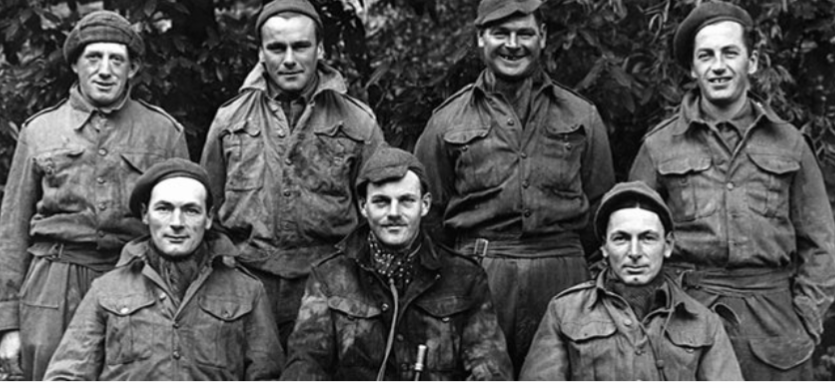
Gubbins was:
“…a regular British Army soldier, (who) had acquired considerable experience and expertise in guerrilla warfare during the Allied intervention in the Russian Civil War in 1919 and in the Anglo-Irish War of 1919-1921. Most recently, he had returned from Norway, where he headed the Independent Companies, the predecessors of the British Commandos.” [2]
Operational patrols of up to 8 men deployed from specially constructed underground hides called operational bases where they were expected to survive and fight without any external support or resupply for a prolonged period of time. A concept familiar to soldiers of the Special OP troop.
Members were usually recruited in the county from where they would conduct operations against the invader. Moreover the use of locals ensured that patrols had an intimate knowledge of the area, where many of them worked outdoors, and had skills enabling them to live off the land if required.
Volunteers were prone to capture and their fate at the hands of the Gestapo would have resulted in torture and death as patrol members would have fallen foul of Hitler’s notorious Commando order. This instruction, issued on 18 October 1942, after a Commando raid on the Channel Islands stated:
‘all men operating against German troops in so-called Commando raids in Europe or in Africa, are to be annihilated to the last man.’ [3]
This probably goes some way to explain the secrecy that didn’t end until decades after hostilities ceased.
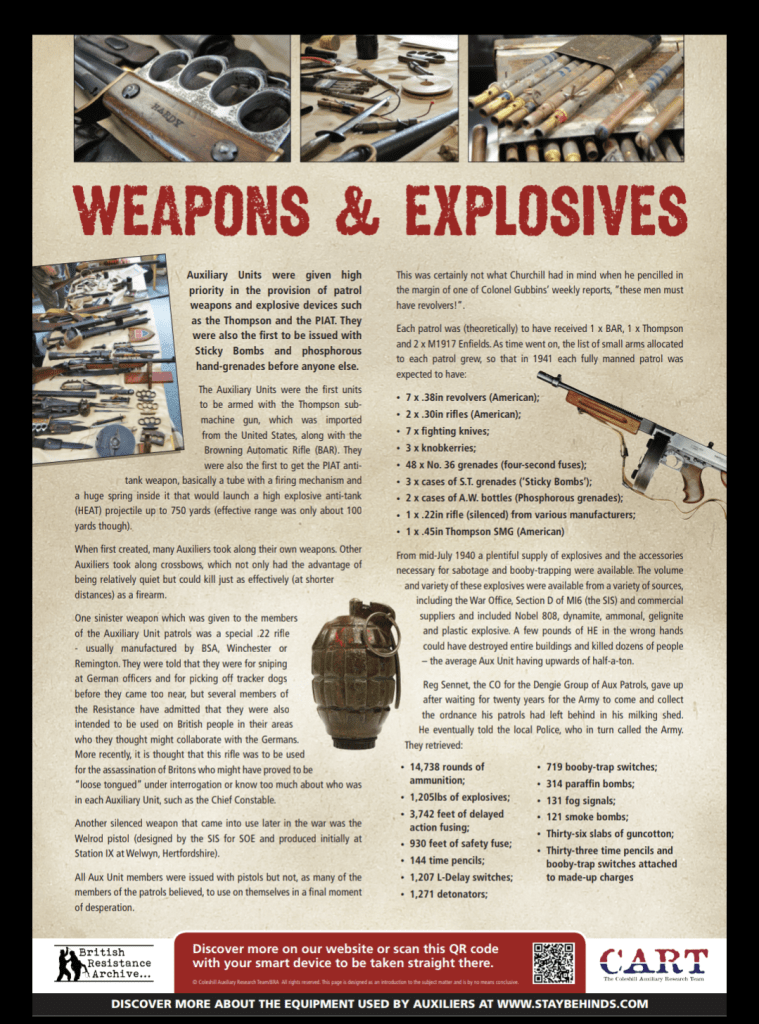
Approximately 3500 [4] were selected for the role and trained in tactics, techniques and procedures familiar to all exponents of guerrilla warfare such as specialist weapons, unarmed combat, use of explosives and targeted assassinations. Weapons were typical for the time and included Thompson SMG but also suppressed weapons, sticky bombs and Fairbairn-Sykes knives.
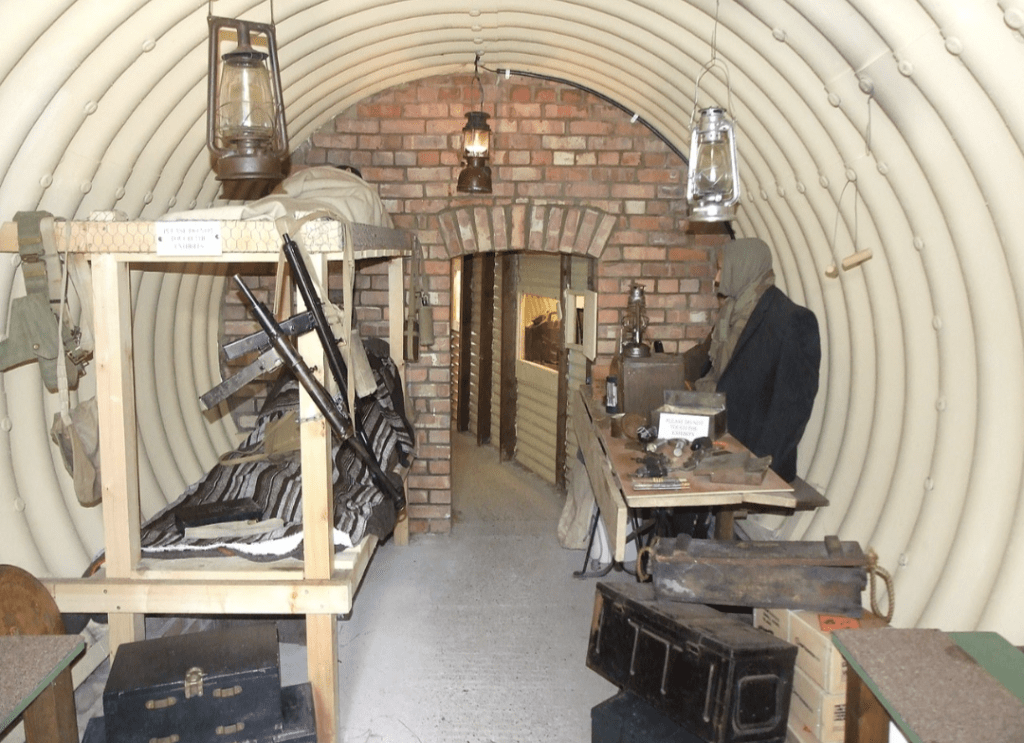
It is thought that 400-500 [5] operational bases were constructed but destroyed at the end of the war. Parham Airfield has a replica of an Operational base and also houses:
“the Museum of the British Resistance Organisation which provides an insight into ‘Britain’s Secret Army’, with contemporary artefacts housed in Nissen Huts and a unique replica secret underground bunker. The Museum aims to shed light on Britain’s best kept war secret”.[6]
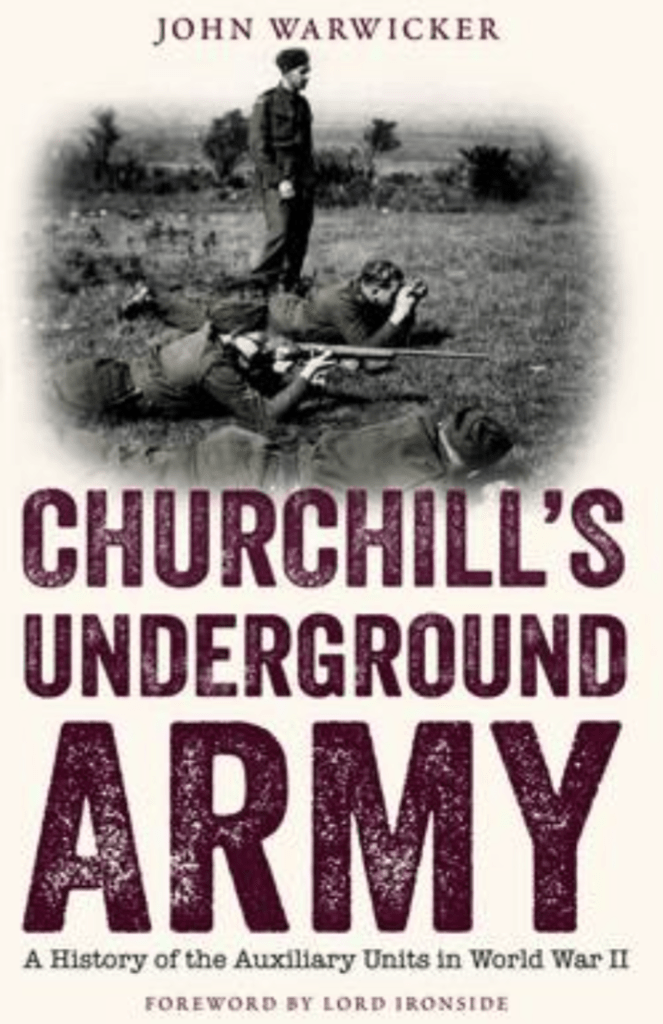
For further reading on Auxiliaries John Warwicker’s book “Churchill’s Underground Army” offers an informative take on this unique unit.
Operation TRACER WW2
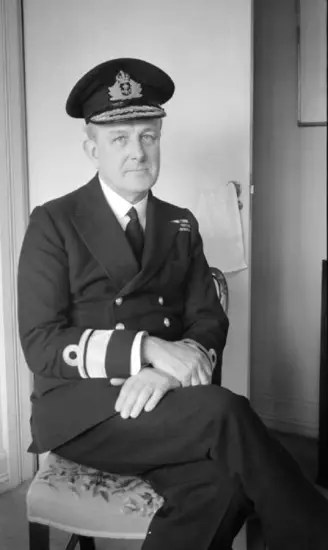
“For TRACER Admiral Godfrey was assisted by James Bond author Ian Fleming then a Lieutenant Commander in the Royal Navy and it is thought Fleming based the character of M in his novels on his boss.”
All stay behind soldiers operate in high threat environments making them prone to capture. Moreover their limited external support and team weapons reduce their chances of survival in a prolonged contact with the enemy. Despite such challenges not many would have been classed as suicide missions which would never be good for the morale of the soldiers involved.
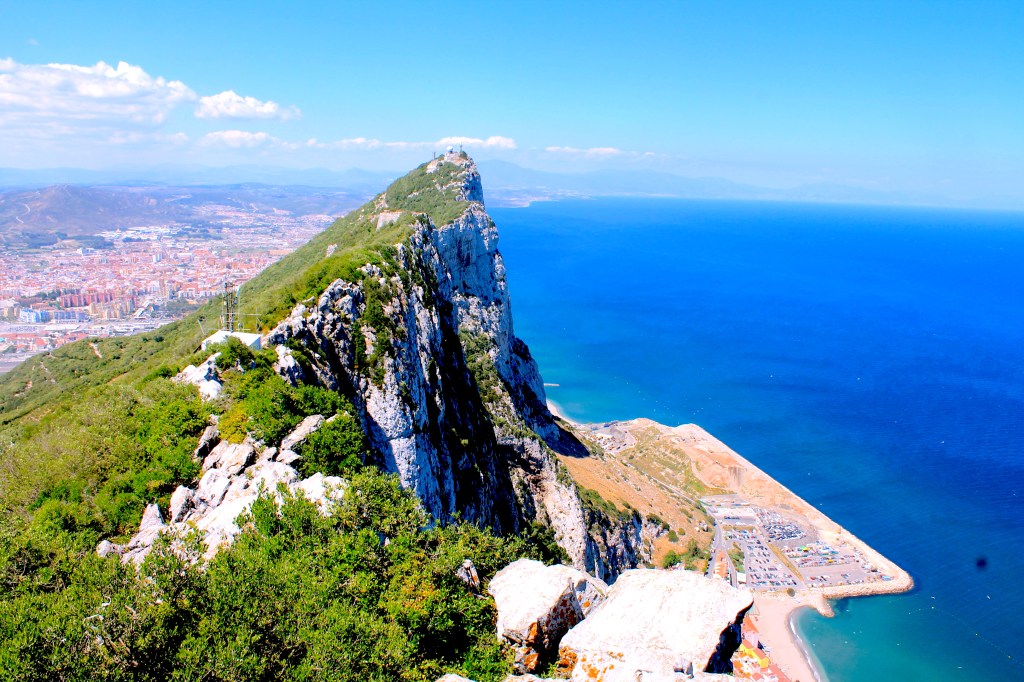
The exception to this may well have been Operation TRACER. TRACER was conceived by Rear Admiral John Godfrey, Director of the Naval Intelligence Division, in the early days of the war with the aim of monitoring shipping in the sea around the Rock. Godfrey was an interesting character who also came up with the idea for for Operation MINCEMEAT the subject of a recent book and film. This was one of the most successful intelligence operations of the war, used against the Germans, as part of the allied plan to invade Sicily.
For TRACER Admiral Godfrey was assisted by James Bond author Ian Fleming then a Lieutenant Commander in the Royal Navy and it is thought Fleming based the character of M in his novels on his boss.
Once Gibraltar was occupied by the Germans the plan was to seal six men within the confines of a specially constructed hide, over two levels, in the Rock measuring 14m x 5m x 2.5m. The hide had two observation areas with arcs into the bay of Gibraltar and the Mediterranean and from here they would observe, log and report shipping movements to the UK via HF communications powered by a manual generator.
The OP was self sufficient with enough water, rations and presumably toilet paper for at least one year although supplies for up to seven years were in situ. To deaden the sound of occupants the inside walls were plastered and the floor covered with cork tiles. Part of the entrance was left as soil so the dead could be buried if required.
This was one of the suggestions made by Surgeon Commander George Murray Levick who had been part of Scott’s 1912 Antarctica expedition. His other advice included diet, exercise and how to keep people occupied. The specially selected OP team consisted of an XO in command, two doctors and three wireless operators.
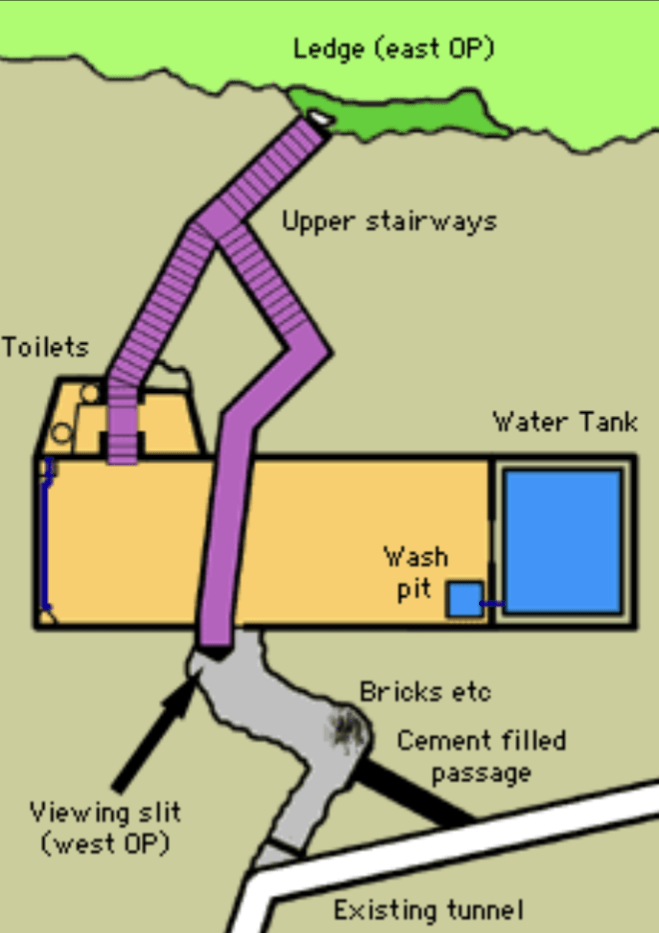
Any undertaking like this requires detailed planning which was captured with its usual professionalism by the Royal Navy in a comprehensive TRACER operational instruction covering all the service and support required to ensure success. It also provided a template for future operations in other theatres.
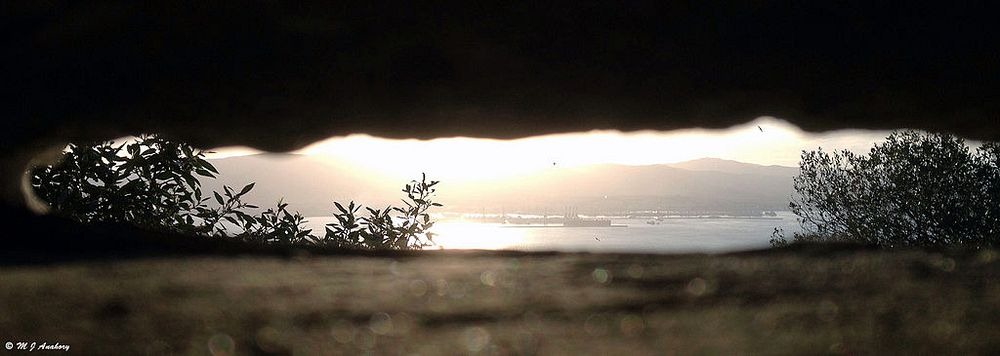
TRACER was ready to be initiated in all respects from mid 1942 but Allied success in North Africa and Sicily meant the threat had been reduced and it was no longer required. The similarities between this operation and the role of stay behind ops is striking. Six man patrols, operating deep in enemy territory with limited support and using HF comms to speak to their HQ element. However the thought of being imprisoned in an underground shelter for up to a year is not one I would have relished.
21 & 23 Special Air Service (R)
“Much more controversial, to my mind, was the top-secret scheme to establish stay-behind bunkers of resolute SAS men up to the former inter-zone frontier of Germany. In the event of a Soviet onslaught, these posts were to allow themselves to be over-run, then report on the direction and weight of the attackers. Given that their positions would almost certainly have been pin-pointed by Soviet spies within NATO, with equal certainty the men would all have ended as posthumous VCs. Fortunately the war never occurred.”
General Sir Peter de la Billiere
After WW2 it became clear the stay behind role would have utility in any future conflict with the Soviet Union. NATO realised it was unlikely to stop the mass of the numerically superior Red Army and would fall back quickly leaving an intelligence and target acquisition gap. One way of filling this gap was the use of stay behind patrols in the form of the Territorial Squadrons of the SAS (R). Both 21 and 23 SAS were designated to this role for much of the Cold War forming the Corps Patrol Unit for 1 British Corps. The history behind this development is particularly interesting:
“21 Special Air Service Regiment (Artists) (Territorial Army/Reserves – TA), a reserve unit with many World War II SAS veterans in its ranks was stood up in 1947 specifically for the task. It was later joined by another TA unit, 23 SAS, which was also formed as a result of a direct military requirement of 1 (BR) Corps. 23 SAS had its roots in the Joint Reserve Reconnaissance Unit (JRRU), a small unit studying ‘the possible methods of acquiring accurate battlefield surveillance and designating nuclear targets’. It was because of the JRRU’s impressive performance during its annual exercise in 1957, when it tested their new techniques in battlefield surveillance and nuclear targeting, that 1 (BR) Corps requested the unit to be included in its order of battle.” [7]
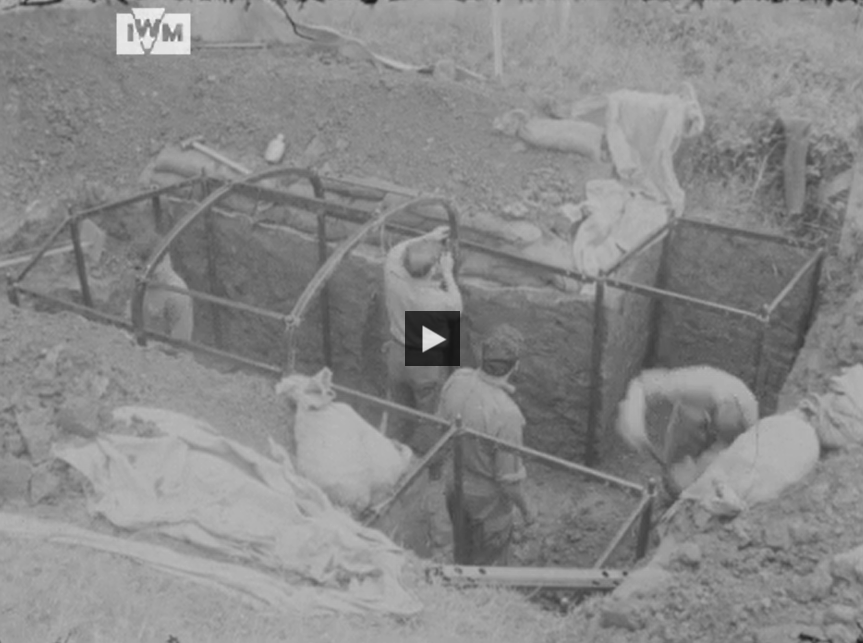
Like the Special OP Troop of the Royal Artillery these patrols operated from MEXE underground hides. From recollection the SAS (R) observed the enemy directly from the mexe hide, unlike the Gunners who would dig their main hides deep in a wood then deploy up to two OPs forward. On this podcast we discuss mexe operations with a former member of the Special OP Troop:
The IWM has a good video of a patrol from the SAS (R) digging in a mexe hide on Exercise Badgers Set filmed in 1972.[8] Looking at this video and where they are digging in, out in the open by a railway line, I am baffled that they thought they wouldn’t be compromised.
Following the publication of the original blog post I received an update on how the SAS (R) deployed from a former member of 21 SAS:
“By the time I was in 21 (81-87) we’d moved on from hides with direct view of MSRs to using them as a patrol base for surveillance & reporting in the rollover phase and then a greater emphasis on target recce for air/missile strike once the shock forces had moved through. We had some of the first LTDs (Laser Target Designators) in 84 I think, for example. We also trained extensively in dems using PE4 etc. I spent 2 yrs in Ops Int, part of which was accurately collating all the pre-dug hides and prepping mapping packs etc, and I dug a few in.”
Special Reconnaissance Squadron Royal Armoured Corps
“The similarities between the selection, training and concept of operations of SRS soldiers and their Special OP counter parts 20 years later was significant.”
The use of SAS (R) soldiers was problematic taking into consideration the time to mobilise patrol members when every hour was vital. Recognising this the decision was taken in 1962 to form the Special Reconnaissance Squadron (SRS) with volunteers from the Royal Armoured Corps (RAC) who would provide a regular Army component until such time reservists could reach the continent. The Squadron was established for 20 patrols of 4 men with supporting personnel giving an all up strength of 100 ranks.[9] and the similarities between the selection, training and concept of operations of SRS and their Special OP counter parts 20 years later was significant.
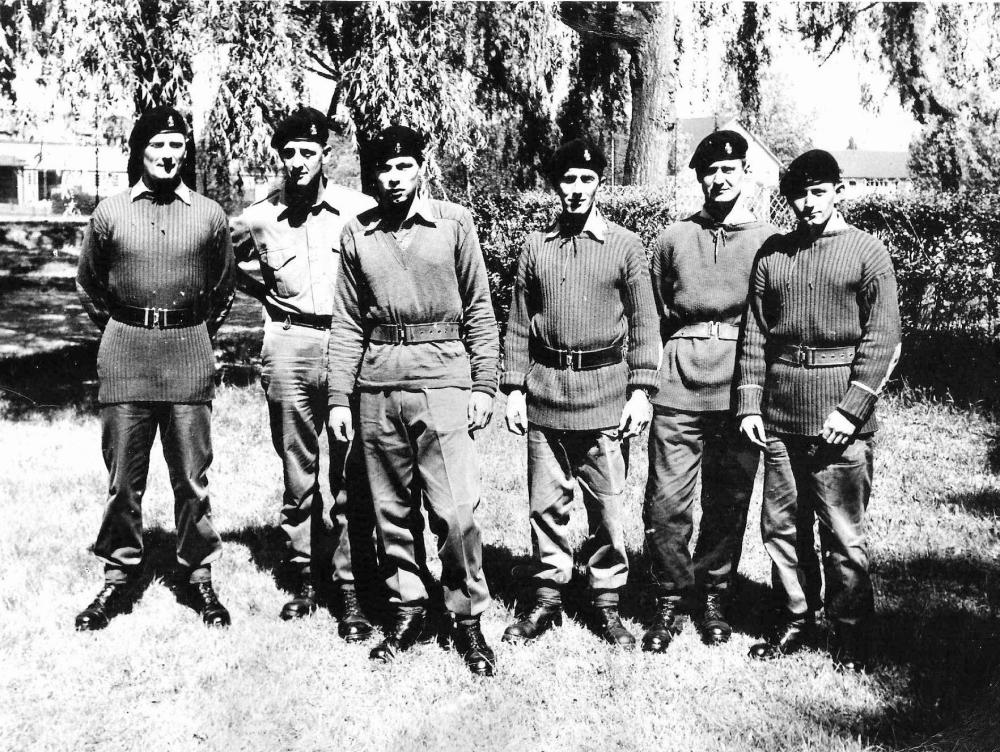
Soldiers were initially selected over a period of 10 days where they were subjected to a series of timed marches with weight, in the Winterberg area of Germany, which was also used as a training area for the Special OPs, and mental tests to assess their suitability. Once successfully through this phase their continuation instruction would have been familiar to any Special OP Troop soldier in the 1980s; demolitions, constructing OPs/hides, weapons and tactics, AFV recognition, advanced first aid and practical Resistance to Interrogation training.
Signals focused on HF comms and morse code to a proficiency of 12 words per minute which was the standard expected of the Special OPs. One area of difference is that all ranks were expected to speak colloquial German. Most of my contemporaries could order a beer, food and a taxi back to barracks but that was about it. What both organisations did have in common was that the soldiers had to be fit, highly resourceful and capable of working in a team or on their own.
In 1964 the SRS’s stay behind role was written out the order of battle with all responsibilities being transferred to 21 and 23 SAS (R).
Honourable Artillery Company (HAC)
“…nearly a decade before the Royal Artillery’s Special OP Troop was formed, the HAC was given the role of providing an additional reserve stay behind OP capability…”
The HAC is the oldest Regiment in the British Army and today forms the reserve component supporting 4/73 (Sphinx) Special OP Battery, the Army’s long range patrols and surveillance unit. However in 1973, nearly a decade before the Royal Artillery’s Special OP Troop was formed, the HAC was given the role of providing an additional reserve stay behind OP capability operating from mexe shelters like their counterparts in the SAS (R). The Regiment provided three Sabre squadrons comprising 4 to 6 man patrols until the commitment finished with the end of the Cold War. These were attached to “the HQs of 1st Artillery Brigade (HQ Sqn HAC), 1 Armoured Division (I Sqn HAC), 4 Armoured Division (II Sqn HAC), and 1 BR Corps (III Sqn HAC) with one ‘sabre’ squadron each.” [10]
You can listen to our podcast about the history of the HAC including its stay behind role in our podcast with Steve Kiely a former member of the Regiment below.
4/73 (Sphinx) Special OP Battery
“By February 1983 one troop was operational and under command of 5 Regiment RA based in Hildesheim.”
At the start of the 1980s stay behind operations were being conducted by the reservist units of the Corps Patrol Unit (CPU), consisting of 21and 23 SAS (R) and the HAC. The requirement for a regular component to conduct similar type operations was obvious.
The idea of a Special OP Troop was developed in 1982 by the then Commanding Officer of 5 Regiment Royal Artillery Lieutenant Colonel (later Major General) ACP Stone RA. After constructing a coherent argument on paper, he presented it to the Corps Commander General Sir Nigel Bagnall GCB, CVO, MC who approved and gave permission for the unit to be raised. By February 1983 one troop was operational and under command of 5 Regiment RA based in Hildesheim. The original troop establishment was 36 all ranks, commanded by a Captain and included six, five-man patrols of which five were led by Subalterns. It was quickly realised that a Sergeant was capable of leading a patrol so the subalterns were removed from the order of battle.
In 1984 the depth fire concept, and move of Regiments to Dortmund, left 5 and 32 Regiments with a Special OP Troop each with the same establishment. Both merged in the late 1980s to form 4/73 (Sphinx) Special OP Battery Royal Artillery and the unit still exists today as the Army’s long range recce patrols unit.
You can listen to our podcast with the General here:
End Of The Cold War
The close of the Cold War after the fall of the Berlin wall followed by the reunification of Germany and the break up of the USSR signalled the end of stay behind operations for the soldiers of the CPU and 4/73 Battery. They would have to realign themselves to the new world threats. For the STA patrols of 4/73 the following decades would see them deploy on nearly all the major theatres of operation involving the Army. You can follow this journey on our podcast series “The Unconventional Soldier” on Spotify or wherever you get your pods from.
Future Use Of “Stay Behind” Operations
Are stay behind operations relevant today? It’s tempting to think this may be the case when you look at the war in Ukraine where a numerically superior enemy, threatening an attack for years has crossed a fixed border.
However in 1982 when the Special OP Troop formed battlespace surveillance was more or less unchanged since WW2. It was still an analogue environment where the general use of satellites was unheard of and the plethora of UAV and other detection systems we see today a futuristic dream. As a result the ability to deploy men on the ground, deep into opposition territory, to provide 24/7 ISTAR coverage of enemy movements was highly desirable to shape the deep battle.
Back then patrol surveillance optics were basic with binoculars and telescopes still being used to good effect during the day. In the hours of darkness advances had been made with first generation night observation devices such as Passive Night Goggles (PNG) and Individual Weapon Sights (IWS) which could be used in and out of OPs. As technology evolved laser binos, better night sights (CWS) and thermal imaging devices (Spyglass) added to the weight of bergens (rucksacks) along with the batteries and air bottles required to power and cool them. All things considered stay behind patrols were a force multiplier.
Would they work now? Even during the Cold War the chance of compromise for patrols was high. Digging in mexes and OPs was a huge logistic effort and the chance of a “walk up” by a civilian or discovery by enemy surveillance assets including SIGINT was always high as can be seen from this example in the 1970s:
“Secure communications, crucial to assure an impact on the overall war effort, were identified as the Achilles heel of SB units. During an exercise, BADGER’S LAIR, near Soltau in 1973, 23 SAS units were quickly discovered by British signals teams using direction finding equipment and dog patrols: 37 out of 39 hides were identified within hours.” [11]
Today the ubiquity of advanced ground and air surveillance systems on our own side, and counter surveillance from the enemy, probably means the use of stay behind troops digging large mexe type hides is redundant. However the need for soldiers to operate beyond their own lines, but not in the SF domain, in an ISTAR role still remains. How they would deploy and operate is another question we discuss with the serving Battery Commander of 4/73 Battery in this podcast:
I will finish with a well used quote from the founder of the Special OP Troop:
“The most reliable, flexible and effective form of target indication was, and still is, provided by the trained OP soldier operating deep in enemy territory.”
Major General ACP Stone CB.
Copyright © 2023. All rights reserved by the author Colin Ferguson. No part of this work may be reproduced in any form or by any means without prior permission in writing of the author.
Rate this article and feel free to comment below:
References:
- [1] Sinai, Eyes On Target: Stay Behind Forces During The Cold War, Sage Journals, Vol 28 Issue 3, 08 Dec 20. https://tinyurl.com/4w7r8vym
- [2] Forces War Records (FWR) Web Site.
- [3] The History Press Web Site.
- [4] FWR ibid.
- [5] Parham Airfield Web Site.
- [6] FWR ibid.
- [7] Sinai ibid.
- [8] https://tinyurl.com/j7vkxwy4
- [9] A Brief History Of The Special Reconnaissance Squadron RAC. http://www.paradata.org.uk
- [10] Wikipedia.
- [11] Sinai ibid.
 Unconventional Soldier Blog
A very interesting article. Thanks for that.
LikeLike
Thanks for reading Marcus and taking time to give some feedback.
LikeLike
Honest and well written…
Regards
Willo
LikeLiked by 1 person
Thanks for reading the blog Gary and for the positive feedback. Much appreciated.
LikeLike
Very interesting articles. Thoroughly enjoyed the equipment and clothing one.
LikeLike
Thanks for reading and taking time to comment John.
LikeLike