

I recently recorded a podcast (out end of September) with veteran war correspondent and author Colin Freeman, whose latest book, “The Mad and the Brave: The Untold Story of Ukraine’s Foreign Legion,” looks at the motivations and experiences of foreign volunteers fighting in Ukraine. With nearly 30 years of reporting under his belt, from local papers to the front lines of Iraq, Afghanistan, and the Arab Spring, Colin brings a unique perspective to this extraordinary conflict.
From Tabloid Sensations to War Zones
Colin’s journalistic career began on local papers, quickly moving to a tabloid news agency where he covered everything from celebrity doorsteps to crime. He describes this early experience as providing a robust foot in the door to journalism, noting that the intensity of tabloid reporting in the ’80s and ’90s meant not much that a war zone was going to be able to throw at you that you wouldn’t have seen already.
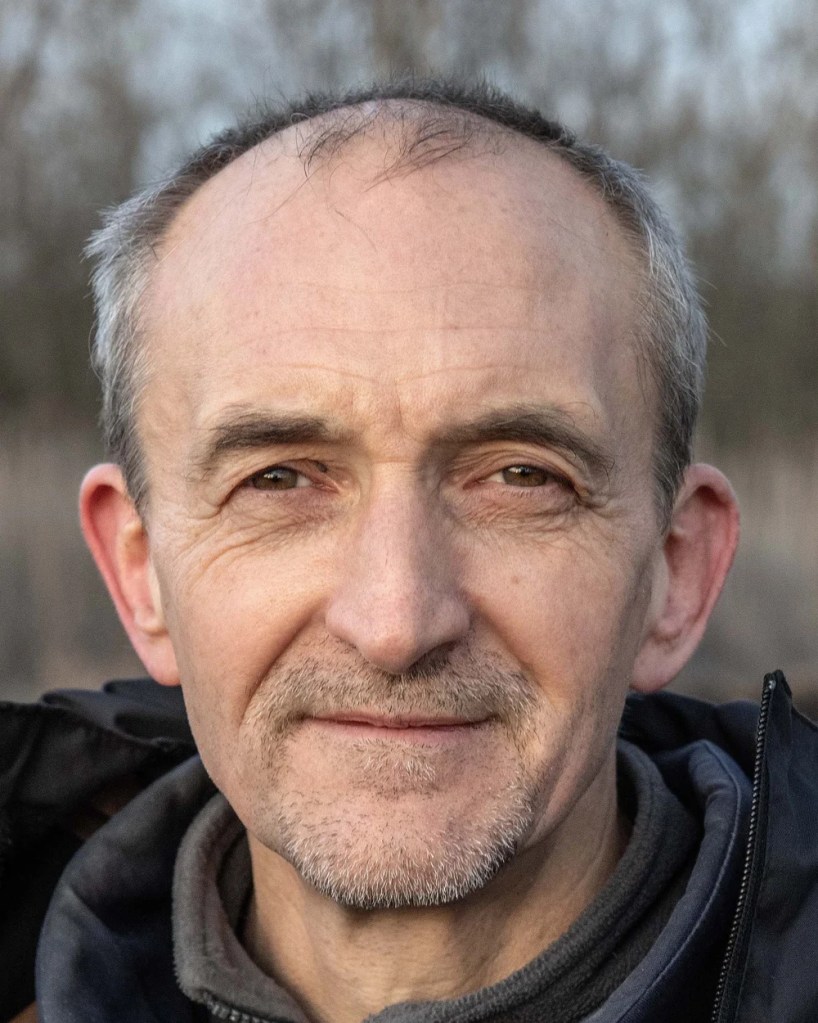
His move to war reporting was almost accidental. During the lead-up to the Iraq War, feeling stuck covering mundane city stories, a photographer colleague suggested he go as a freelancer. What began as a leap in the dark, akin to backpacking with “a bit more adventure” and purpose, turned into two years living in Baghdad, covering the post-invasion insurgency. Since then, he’s reported from numerous global hotspots, including the Arab Spring, the Ebola crisis, Iran, Afghanistan, and even survived a six-week kidnapping by pirates in Somalia – an experience that provided an unexpected good research exercise for understanding captivity.
For the past three years, Colin has been covering the war in Ukraine, initially as a freelancer for the Daily Telegraph. It was here that the idea for “The Mad and the Brave” was born, driven by a desire to explore the remarkable backstories and motivations of the foreign volunteers.
Inside Ukraine’s Foreign Legion: Why Do They Fight?
The International Legion for the Defence of Ukraine, established in February 2022, comprises foreign volunteers from over 72 countries. Colin’s book explores the diverse reasons individuals drop their civilian lives to join a conflict unlike anything seen since World War II, where they face an enemy that does not play by the rules.
The title, “The Mad and the Brave,” encapsulates a central theme: many volunteers are seen as “crazy” by friends and family for wanting to fight in a war in a far off land. Colin highlights several key motivations:
- Defending Democracy: Many are drawn by the clear moral imperative of fighting for freedom against an aggressor.
- Seeking Purpose: For some, often ex-soldiers who felt a lack of direction after military service, Ukraine offers a renewed sense of purpose, camaraderie, and a second family.
- Combating PTSD: Surprisingly, some veterans of Iraq and Afghanistan, disillusioned by past conflicts, find a chance for redemption or a right side of history narrative in Ukraine.
- The “First-Time Fighter”: Perhaps most astonishing are those with no prior combat experience, like Douglas Cartner, who self-taught soldiering techniques via YouTube to achieve a lifelong dream.

The Chaos and Challenges of the Early Days
Initially, the Legion faced significant organisational challenges. Created quickly it lacked rigorous vetting, leading to unqualified individuals, those with criminal records, and Walter Mitty characters — people making exaggerated claims about their military experience — joining the ranks. These issues resulted in instances of desertion and a reluctance among Ukrainian commanders to fully trust foreign units, often leading to them forming their own “ad hoc units to seek combat opportunities.
Colin notes the unique stress of fighting alongside strangers whose combat skills are unknown, comparing it to herding cats in battle. He highlights that many can be wary of fellow volunteers underscoring the vital role of trust-building among these small, self-selected groups.
The Horrors of Russian Captivity
A particularly disturbing aspect of the book covers the experiences of those captured by Russian forces. Their accounts reveal a consistent pattern: initial rough handling by captors, followed by brutal interrogations in black site prisons in separatist-controlled eastern Ukraine. Volunteers faced non-stop beatings, torture with electricity, sleep deprivation (music played at full blast), and threats of capital punishment. These harrowing experiences often led to suicidal thoughts among prisoners.
Colin, having been kidnapped himself, carefully navigated these sensitive interviews, focusing on specific incidents to capture “movie scene detail” while respecting the interviewees’ trauma.
The Paradox of Service and the Road Home
The conversation also touched on the stark contrast between foreign volunteers entering Ukraine and eligible Ukrainians who have left the country. While some might expect blood curdling quotes from Ukrainian fighters about their countrymen not serving, the prevailing sentiment is often pragmatism: “if these guys don’t want to fight, they’d be no use anyway”.
However, the journey home for these volunteers is often fraught with difficulties. They return to a lack of official support from their home governments (like the UK, which advises against fighting in Ukraine) and often face a lack of understanding from civilians. Issues like PTSD, mental health challenges, and social isolation are common, exacerbated by the absence of peers who share similar experiences. Colin recounted the poignant story of Andrew Hill, a former POW, whose attempts to share his experiences in a mental health support group left the room silent, underscoring the profound uniqueness of his trauma. This often leads to volunteers returning for multiple tours, finding the “itch” of combat and the sense of belonging addictive.
Imagining a More Effective Legion
Colin believes that a more organized and robust Legion, with “discrete arms length help from Ukraine’s allies,” could have been a far more formidable fighting force. He suggests three key changes:
- Experienced Leadership and Vetting: Sending experienced NCOs and commanders to run the Legion, weed out “bad apples,” and ensure proper vetting.
- Translators and Interpreters: Providing essential linguistic support for smooth operations.
- Western Training: Utilizing Western expertise (similar to how armies were trained in Iraq and Afghanistan) to give the Legion a structured, efficient edge.
He states that such a structure could have attracted 50,000-100,000 volunteers, comparable to numbers seen in the Spanish Civil War or fighting for ISIS, rather than the estimated 10,000 currently serving.
The Future of the War
Regarding the war’s future, Colin acknowledges the difficulty of predicting outcomes, especially with ongoing diplomatic efforts. He suggests that any peace deal might involve de facto recognition of Russian-held territories without legal concession, that Ukrainians might only accept if they can blame external pressures like the US. Long-term, he envisions Ukraine becoming a “Slavic Israel,” militarily self-sufficient and economically supported by Europe.
In summary, Colin Freeman’s “The Mad and the Brave” offers a compelling, unfiltered look into the lives of those who choose to fight for a country not their own, exploring their idealism, their struggles, and their impact on one of the most significant conflicts of our time. It’s a must-read for anyone seeking to understand the human element of the war in Ukraine.
Colin Freeman’s “The Mad and the Brave” is available on Amazon, the Harper Collins website, and in bookshops.
Copyright © 2025. All rights reserved by the Unconventional Soldier blog. No part of this work may be reproduced in any form or by any means without prior permission in writing of the author.
Cover photo credit: Ukrainian International Support Legion Morale 3D PVC Patch – Foreign Solidarity Ukraine – Etsy UK
 Unconventional Soldier Blog